
Properties with high rental yields and areas dominated by owner-occupiers are likely to catch buyers’ attention following major property tax changes.
The abolishment of negative gearing for established dwellings and the reduction in the capital gains tax discount announced in the federal budget in May has shifted buyer behaviour and dampened investor demand.
Prices have fallen across almost all the capitals recently as buyers digest exactly what the tax changes mean while grappling with higher interest rates following three hikes by the Reserve Bank this year, reversing last year’s easing.
But even though many buyers have held back in anticipation of further price falls, and some would-be investors have exited the market entirely, there are still opportunities in the market that are likely to attract buyer interest.
Positive rental returns
REA Group senior economist Anne Flaherty said the changes to negative gearing and the capital gains tax discount would prompt some investors to focus on areas and properties that offered higher rental yields.
“A property that’s going to get a higher rental income is going to become more attractive,” she said.
This is because owning a loss-making investment property (where expenses exceed the rent) no longer has the same tax advantages as it once did, while investors who are willing to accept short-term negative cashflow with the expectation of long-term capital growth will likely pay higher capital gains tax.
Outer suburbs tend to have more affordable property prices and higher rental yields. Picture: realestate.com.au/buy
Previously, property investors who held an asset for more than 12 months could claim a 50% discount on capital gains tax, meaning tax was only payable on half the gain.
That discount will be abolished from July next year and replaced with an inflation-indexation model, where the cost base (the purchase price plus any purchase costs such as stamp duty) will be indexed to inflation. A minimum 30% tax rate on capital gains will also apply.
Meanwhile, negative gearing changes mean investors who buy established properties where expenses exceed the rental income can no longer deduct that loss against other income, as was previously the case.
Ms Flaherty said these changes wouldn’t necessarily deter all investors from entering the market, but would likely shift the kinds of properties investors are targeting and the very make-up of the investor segment.
“Half of property investors don’t negatively gear so there’s still a considerable number of investors who are looking to put their money into something who might be looking for yield more than previously,” she said.
“The kinds of investors who might be more active now are older people who already have a lot of wealth who might be looking to invest that money, not looking to take advantage of negative gearing, which is more attractive to younger people who are still in the workforce,” she said.
“For investors looking for negative gearing as an important aspect, they’re probably just not going to be investing in property any more.”
Outer suburbs and regional areas
High-yielding suburbs for houses are most likely to be found in regional areas or the outer suburbs of capital cities, which is largely a product of lower home prices in these areas.
“Even though rents are going to be lower further out, relative to the value of the property it can still produce a good income,” Ms Flaherty said.
“Generally speaking, regional areas have lower home prices than the capitals, but we don’t see a proportional decline in rents.”
Top capital city suburbs for rental yield - houses
| Suburb | Capital city | Rental yield | Median sale price | Median weekly rent | |
| 1 | Crangan Bay | Sydney | 4.9% | $1,110,000 | $875 |
| 2 | Gilead | Sydney | 4.5% | $1,150,000 | $820 |
| 3 | Warnervale | Sydney | 4.3% | $975,000 | $800 |
| 4 | Point Clare | Sydney | 4.2% | $1,157,500 | $725 |
| 5 | Blue Haven | Sydney | 4.2% | $849,500 | $650 |
| 1 | Warburton | Melbourne | 4.3% | $702,500 | $550 |
| 2 | Hastings | Melbourne | 4.3% | $728,556 | $580 |
| 3 | Clyde | Melbourne | 4.3% | $720,000 | $590 |
| 4 | Wollert | Melbourne | 4.3% | $712,000 | $560 |
| 5 | Coolaroo | Melbourne | 4.3% | $633,500 | $495 |
| 1 | Russell Island | Brisbane | 5.3% | $500,000 | $450 |
| 2 | Macleay Island | Brisbane | 4.7% | $567,500 | $490 |
| 3 | Coochiemudlo Island | Brisbane | 4.6% | $775,500 | $550 |
| 4 | Toogoolawah | Brisbane | 4.5% | $650,000 | $475 |
| 5 | Laidley North | Brisbane | 4.4% | $664,000 | $575 |
| 1 | Stratton | Perth | 5.0% | $685,000 | $650 |
| 2 | Midvale | Perth | 4.7% | $732,500 | $750 |
| 3 | Balga | Perth | 4.7% | $725,000 | $680 |
| 4 | Camillo | Perth | 4.7% | $675,000 | $605 |
| 5 | Swan View | Perth | 4.7% | $797,500 | $680 |
| 1 | Elizabeth North | Adelaide | 4.5% | $547,000 | $470 |
| 2 | Elizabeth Park | Adelaide | 4.4% | $620,000 | $500 |
| 3 | Davoren Park | Adelaide | 4.3% | $610,000 | $500 |
| 4 | Eyre | Adelaide | 4.3% | $698,000 | $550 |
| 5 | Salisbury North | Adelaide | 4.3% | $650,000 | $550 |
| 1 | Gagebrook | Hobart | 5.9% | $402,500 | $470 |
| 2 | Herdsmans Cove | Hobart | 5.9% | $475,000 | $465 |
| 3 | New Norfolk | Hobart | 5.6% | $510,000 | $500 |
| 4 | Bridgewater | Hobart | 5.5% | $500,000 | $480 |
| 5 | Clarendon Vale | Hobart | 5.4% | $517,500 | $520 |
| 1 | Berrimah | Darwin | 7.6% | $420,000 | $900 |
| 2 | Zuccoli | Darwin | 7.1% | $700,000 | $780 |
| 3 | Muirhead | Darwin | 6.3% | $830,000 | $900 |
| 4 | Moulden | Darwin | 5.8% | $537,500 | $600 |
| 5 | Karama | Darwin | 5.8% | $605,000 | $650 |
| 1 | Whitlam | Canberra | 4.7% | $1,300,000 | $920 |
| 2 | Strathnairn | Canberra | 4.6% | $957,750 | $680 |
| 3 | Holt | Canberra | 4.3% | $823,594 | $660 |
| 4 | Moncrieff | Canberra | 4.3% | $1,087,500 | $780 |
| 5 | Dunlop | Canberra | 4.2% | $907,500 | $700 |
For units, higher rental yields are typically found in inner-city areas that are in-demand among renters.
“Inner city apartments are still pretty competitively priced, especially in a city like Melbourne where there’s a high supply of units,” Ms Flaherty said.
“We also know there’s a dire shortage of rental properties in inner city markets, which means rents have risen quite rapidly in the inner cities and that is helping to achieve higher rental prices.”
Risks of chasing rental yield
While high rental yields may initially prove attractive, focusing solely on rental returns could trip buyers up, according to Melbourne buyer’s agent Cate Bakos.
“I think the high rental yield model is a bit of a furphy in this day and age,” she said.
“When you factor in land tax holding cost, compliance costs, maintenance, property management, insurance and council rates, you're not making much, if anything.”
Ms Bakos said properties with higher rental yields often had lower capital growth potential.
“Why would you want to make a couple of thousand a year on something that's not delivering growth? You’d rather have negative cashflow and dynamic capital growth.”
Top capital city suburbs for rental yield - units
| Suburb | Capital city | Rental yield | Median sale price | Median weekly rent | |
| 1 | Ultimo | Sydney | 6.3% | $727,000 | $760 |
| 2 | Auburn | Sydney | 6.3% | $597,500 | $650 |
| 3 | Mascot | Sydney | 6.2% | $900,000 | $1,050 |
| 4 | Chippendale | Sydney | 6.1% | $800,000 | $900 |
| 5 | Granville | Sydney | 5.9% | $530,000 | $630 |
| 1 | Travancore | Melbourne | 7.9% | $370,000 | $525 |
| 2 | Notting Hill | Melbourne | 7.4% | $410,000 | $550 |
| 3 | Melbourne | Melbourne | 7.3% | $460,000 | $660 |
| 4 | West Melbourne | Melbourne | 7.2% | $522,500 | $625 |
| 5 | Carlton | Melbourne | 7.0% | $310,000 | $490 |
| 1 | Brisbane City | Brisbane | 5.2% | $760,000 | $790 |
| 2 | Fortitude Valley | Brisbane | 4.8% | $660,000 | $660 |
| 3 | Spring Hill | Brisbane | 4.8% | $700,000 | $650 |
| 4 | South Brisbane | Brisbane | 4.6% | $772,000 | $800 |
| 5 | Woolloongabba | Brisbane | 4.6% | $762,000 | $720 |
| 1 | Wellard | Perth | 6.3% | $525,000 | $550 |
| 2 | Northbridge | Perth | 6.1% | $585,000 | $740 |
| 3 | Perth | Perth | 5.9% | $610,000 | $750 |
| 4 | Cloverdale | Perth | 5.9% | $585,000 | $675 |
| 5 | Forrestfield | Perth | 5.9% | $525,000 | $620 |
| 1 | Adelaide | Adelaide | 5.1% | $600,000 | $620 |
| 2 | Mawson Lakes | Adelaide | 5.1% | $565,000 | $550 |
| 3 | Paralowie | Adelaide | 4.8% | $470,000 | $470 |
| 4 | New Port | Adelaide | 4.8% | $520,000 | $525 |
| 5 | Gawler East | Adelaide | 4.7% | $562,250 | $480 |
| 1 | Brighton | Hobart | 5.6% | $497,500 | $480 |
| 2 | Old Beach | Hobart | 5.5% | $555,500 | $580 |
| 3 | Claremont | Hobart | 5.2% | $489,000 | $485 |
| 4 | Moonah | Hobart | 5.2% | $462,000 | $485 |
| 5 | Montrose | Hobart | 5.2% | $510,000 | $490 |
| 1 | Karama | Darwin | 7.7% | $325,000 | $500 |
| 2 | Malak | Darwin | 7.7% | $300,000 | $495 |
| 3 | Woodroffe | Darwin | 7.6% | $311,000 | $500 |
| 4 | Coolalinga | Darwin | 7.6% | $350,000 | $510 |
| 5 | Moulden | Darwin | 7.6% | $365,000 | $510 |
| 1 | Gungahlin | Canberra | 6.6% | $430,000 | $530 |
| 2 | Curtin | Canberra | 6.4% | $339,000 | $500 |
| 3 | Lyons | Canberra | 6.3% | $364,000 | $490 |
| 4 | Chifley | Canberra | 6.2% | $635,000 | $520 |
| 5 | Belconnen | Canberra | 6.1% | $480,000 | $560 |
High rental yields can sometimes reflect a higher risk, Ms Flaherty said.
“In some regional towns rentals might get snapped up, but in others there isn’t as much demand,” Ms Flaherty said. “So there might be a higher vacancy risk if it’s a regional area without a diverse economy.”
However, Ms Flaherty said some areas with strong population growth and a shortage of housing supply could offer both strong rental returns and capital growth.
“The middle ring suburbs in Perth are a good example, where we have a massive shortage of homes, rents have risen rapidly and prices have risen rapidly too,” she said.
Owner-occupier demand
Ms Bakos said the tax changes meant many would-be investors would shift focus to growing their wealth through their own home rather than purchasing investment properties.
“I think we’ll see a lot of people seeking to invest in their long-term family home,” she said.
“It’s definitely, at this stage, a way more attractive way to enjoy capital growth without the capital gains tax.”
Get your realEstimate™
Track your property's value and unlock insights and data tailored for property owners.
Sydney buyer’s agent Veronica Morgan said owner-occupied dominated suburbs will be the areas most likely to hold up best amid a market downturn.
“Owner-occupiers are the people who push up prices,” she said. “Let’s face it, there's not a lot of investors out there trying to buy established properties.”
Areas within reach of first-home buyers looking to take advantage of a lull in the market may prove popular, Ms Morgan said.
“First-home buyers have more favourable conditions than they had before,” she said.
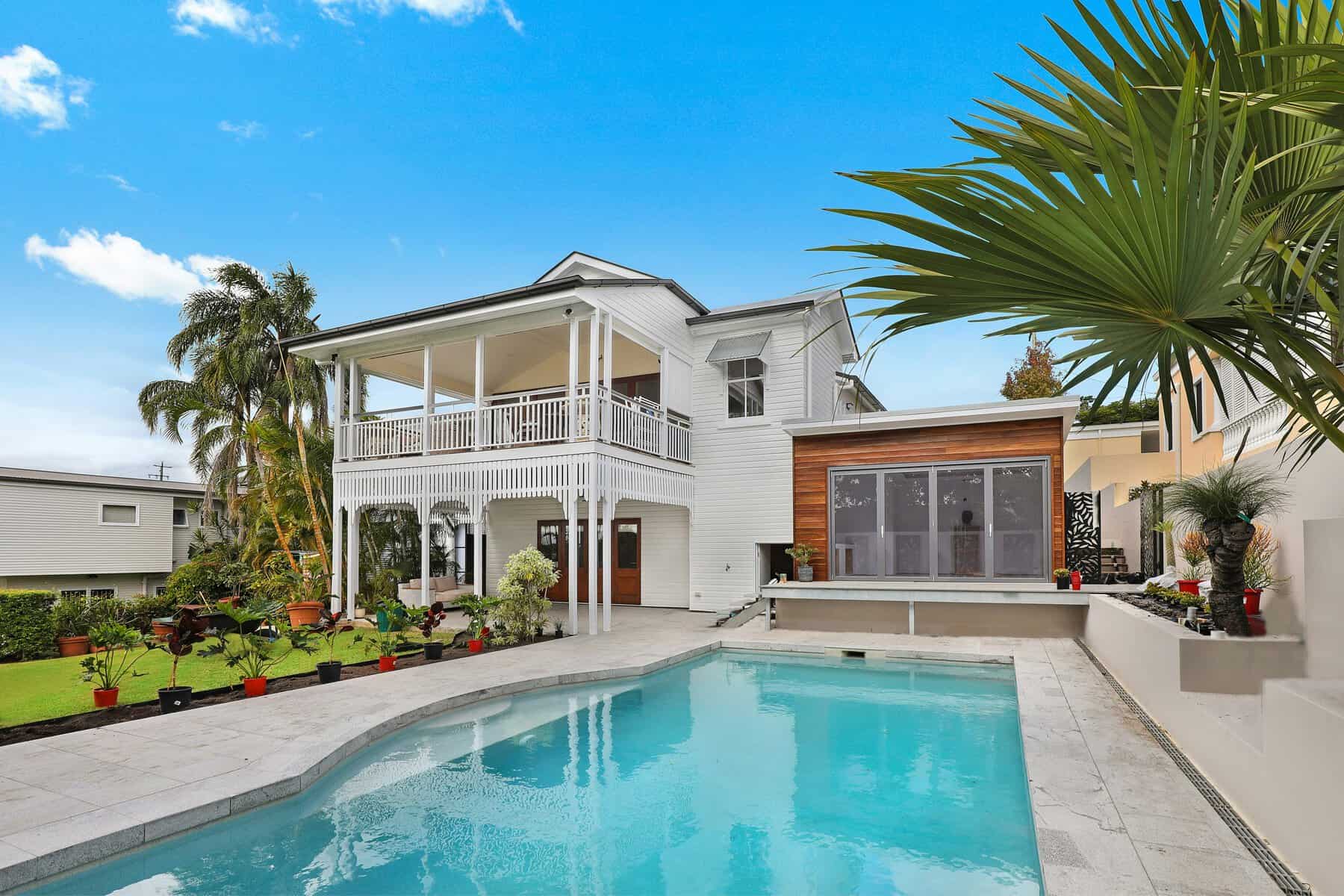
'Aspirational yet affordable' areas that appeal to owner-occupiers could be well-placed to weather property tax changes targeting investors. Picture: realestate.com.au/buy
Ms Morgan said some owner-occupiers will likely turn their attention towards “affordable, yet aspirational” suburbs perceived to be within reach now that prices have pulled back, Ms Morgan said.
That increased attention could come at the expense of ‘bridesmaid’ suburbs - areas that, in a hot market, tend to attract buyers priced out of the more popular neighbouring suburbs.
“Bridesmaid suburbs tend not to do well [in a downturn] because people think ‘I don't have to compromise, I can afford to be where I want to be’,” she said.
However, Ms Morgan said high interest rates meant prices may remain weaker at the top end of the market where homes are beyond the reach of typical buyers.
“Where you've got particularly expensive property, that is particularly tough,” she said.
The latest realestate.com.au Property Market Outlook predicts property prices will decline in the major capitals this year, before growth resumes in 2027.
Source: realestate.com.au Property Market Outlook - June 2026
Prices in Sydney and Melbourne are expected decline by 3% and 4% respectively throughout 2026, while price growth in the smaller capitals will slow following a strong boom period.
However, the downturn won’t last long, with prices expected to keep rising next year, albeit at a slower pace.












 English (US) ·