
Inheritance fights are largely believed to happen only after death: A will is read, a sibling feels slighted, a family home becomes the center of a dispute. But estate experts say a more troubling version of that conflict is starting earlier—while parents are still alive.
“I think the reason we're seeing such a big increase in inheritance pressure is because you have a lot of people who have wealth that they don't necessarily require,” says Stephan Shipe, a certified financial planner and founder of Scholar Advising, a fiduciary firm specializing in complex planning for high-net-worth and ultra-high-net-worth families.
Instead of waiting for assets to pass down after death, Shipe says more families are confronting the question of whether wealth should be transferred earlier, at the moment adult children may need it most.
“What’s interesting is this is one of the first generations where the kids are fully aware that their parents have all of this wealth just sitting out there that they won’t be able to touch until death,” Shipe says. “So you have this classic inheritance story—think of every Shakespearean play where somebody has to die to get the inheritance, and now it’s just happening at scale.”
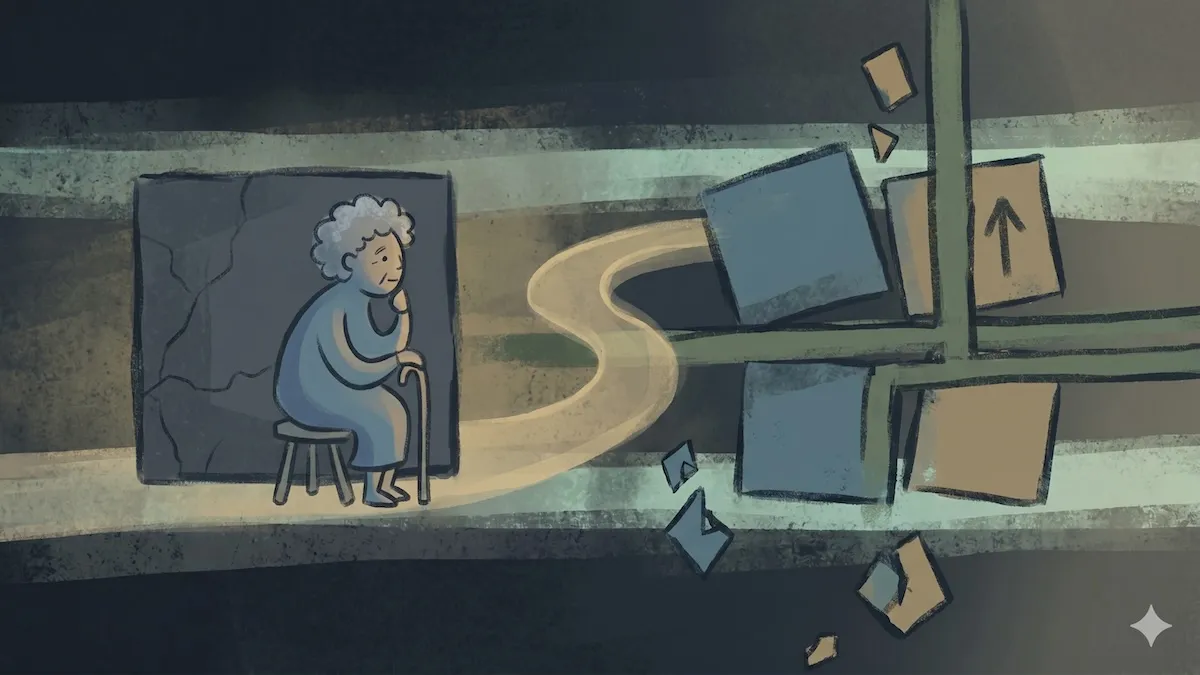
And just as in the Bard’s works, that pressure often arrives when a parent is most vulnerable—when age, illness, grief, or isolation have already begun to loosen their grip on control. But unlike a drama confined to the stage, the fallout in these real world tragedies can last generations.
The rise of inheritance pressure
At the center of the issue is a generational clash: Older Americans are expected to pass down an estimated $124 trillion in wealth in the coming decades, while younger generations are being squeezed by affordability today.
Shipe says he has seen that pressure show up even in routine planning meetings. In one case, a client brought her children into an annual financial review to help them understand the family’s overall strategy. But during the meeting, he says, one son began “doing the math.”
“You could see the gears turning,” Shipe says. “My mom doesn't need this money, but I need this money.”
The son began making comments such as, “well, you don’t really need it,” and suggested that maybe it was time for his mother to start handing wealth down or sell her house and move somewhere smaller.
“That’s the kind of pressure we’re starting to see,” Shipe says, “and the parents weren’t anticipating that type of behavior at all.”
On its own, that kind of conflict may be awkward, painful, or inappropriate. But it’s not necessarily exploitation. The line becomes more serious when a parent’s freedom to choose starts to narrow—when one person is controlling access, threatening care, exploiting illness or grief, or pushing legal changes that benefit them at the expense of the parent or other heirs.
That’s when inheritance pressure can overlap with elder financial exploitation, a broader category of abuse involving the improper or unauthorized use of an older adult’s money, property, or assets, according to the Department of Justice. In all, this type of crime is estimated to have cost seniors $28.3 billion every year, according to the AARP—with roughly 72% of those losses coming from someone the victim knows.
Why rising home values are raising the stakes of inheritance
As property values have soared, the family home has become a windfall—making it both a bridge and a target.
“Home values have increased so dramatically that you have all of this wealth sitting out there, and the generation right behind is looking at it saying, I can't afford to buy into a home, I'll never be a homeowner,” Shipe says, adding that many are "starting to ask, ‘How can I start transferring that benefit down to me now?’”
Baby boomers alone are estimated to hold as much as $19 trillion in real estate wealth, and more older homeowners appear to be leveraging that equity to help younger buyers break into the market—nearly 80% of Gen Z buyers had financial help with their purchase.
Of course, that stat isn't reflective of abuse. Instead, it's an example of one of the primary ways homeownership is supposed to build generational wealth and benefit families.
Realtor.com® research has found that housing wealth plays a central role in intergenerational mobility. Homeownership remains one of the primary ways families build wealth, and parental transfers explain about 13 percentage points of the homeownership rate among young households.
But the same force that makes equity so powerful also makes it vulnerable. When a parent’s house is the difference between one child buying property, paying off debt, retiring early, or securing a larger inheritance, it can become a target.
Michael Hackard, founder of Hackard Law and author of the forthcoming book "Stolen Inheritance: How the Vulnerable Lose Their Estates—and What Families Can Do," says real estate has long been central to elder financial exploitation cases, especially in high-cost states like California.
“I've made that point for a long time here, that that is really the central asset in almost all California state exploitation matters,” Hackard says. “The rising house values, you know, haven't really changed the mechanism of abuse, but they've enlarged the prize, and probably intensified the loss to a family.”
Shipe agrees, noting that these conflicts are rarely just financial.
“Houses are the worst for disputes, especially with multiple siblings, because everyone treats those assets differently,” Shipe says. “Everyone has different memories there, different goals.”
The signs of inheritance exploitation
So, when is your family at risk? The warning signs appear when a person’s independence starts to narrow, Hackard says—especially if they're already vulnerable and a family member or caregiver begins inserting themselves into financial decisions.
He gives the example of an adult child who believes they can persuade a parent that “everything should belong to them,” then threatens to send a parent to a nursing home if they don't turn over the house or inheritance.
Isolation is another red flag. Hackard says it can begin with someone listening in while a parent is on the phone or staying in the room during visits. Then it can escalate to blocked calls, a confiscated phone, or excuses when a relative comes to visit.
From there, the ownership of assets can be redirected. And even though it may seem like a house is safer, a home may be transferred outright. Someone may be added to the deed through joint tenancy. A will or trust may be changed. Or the property may be moved into a trust that names the alleged wrongdoer as trustee and, in some cases, sole beneficiary.
Hackard says he saw that pattern play out in a Los Angeles case involving an elderly, very ill mother and four adult children. One son, whom Hackard described as physically intimidating and threatening to his sisters, allegedly locked them out, isolated their mother, and got her to change the trust so that multiple properties—at least four, and possibly five houses—would go to him.
The sisters, Hackard says, had been cut out of the properties and the rental income. They also had no practical way to recover the real estate without a lawsuit. Hackard took the case on contingency, sued, and says the brother ultimately turned everything over in a settlement.
How to protect your family
For families, the best protection may be prevention long before a dispute erupts.
Hackard recommends parents share their estate plan with their children—not just one child—so everyone knows what exists, where it is, and what the plan says. Regular check-ins can also help, especially when a parent is experiencing declining capacity.
Shipe gives similar advice: Have the conversation early, and be intentional.
“If you don’t make these decisions clearly and intentionally, your kids will have to, and they’ll be doing it without you in the room,” he says. “Assumptions are never good, especially when your kids are already in an emotionally trying time trying to figure out why one sibling received certain assets and another didn’t, or why one got the vacation home and another got a financial account.”
The goal is not to make inheritance less emotional. It's to make it harder for secrecy, pressure, or isolation to become a weapon—and harder for the family home to divide the wealth it was supposed to preserve.
Allaire Conte is a senior advice writer covering real estate and personal finance trends. She previously served as deputy editor of home services at CNN Underscored Money and was a lead writer at Orchard, where she simplified complex real estate topics for everyday readers. She holds an MFA in Nonfiction Writing from Columbia University and a BFA in Writing, Literature, and Publishing from Emerson College. When she’s not writing about homeownership hurdles and housing market shifts, she’s biking around Brooklyn or baking cakes for her friends.









 English (US) ·