
Sydney’s housing pipeline has become an optical illusion, with new figures revealing the city is building fewer new homes than reported, influenced by a demolition blitz and “zombie” projects.
Analysis of ABS figures has revealed 25,552 dwellings were approved for construction across Sydney over the year, but the numbers were offset by 4331 homes getting bulldozed.
This meant the true increase in housing was about 16 per cent lower than the headline approvals figures would indicate.
And not every approved project is getting off the ground, with experts revealing many of the building sites approved for development have been sitting untouched, sometimes for years.
Many approved projects have become “zombie” projects – sites where the developers had the green light from council to proceed with building but not a single brick has been laid because the projects are no longer feasible at current costs.
New data has revealed 25,552 dwellings were approved for construction across Sydney over the year, but the numbers were offset by 4331 homes getting bulldozed. Picture: Brendon Thorne/Bloomberg via Getty Images
The data revealed the highest number of total dwelling approvals were in Ermington – Rydalmere (927) followed by Oatlands – Dundas Valley (288) while the greatest number of demolitions were in Ryde (69), North and East Ryde (55) and Oatlands Dundas Valley (50).
The National Housing Accord’s 1.2 million‑home target was meant to curb price growth by boosting supply, but it doesn’t account for the hundreds of thousands likely to be lost to demolition.
Housing Industry Association (HIA) economist Maurice Tapang expects barely one million homes to be built in the time frame, with hundreds of thousands demolished.
“In net terms, we think it will be closer to 800,000,” Mr Tapang said.
“And that definitely isn’t enough to meet growing demand.”
MORE: ‘Low’: Panic as new Albo scheme backfires
Some experts are pointing to feasibility as the greatest obstacle for home building due to rising costs and skill shortages, particularly in Western Sydney. Picture: Getty
HIA Executive Director NSW Brad Armitage said its not uncommon for there to be a lag between approvals and commencements, adding their data reveals NSW’s 30‑year housing undersupply is at its worst with a 20 per cent shortfall in comparison to existing stock.
“The Department of Planning has been doing some work on so-called zombie approvals, but that’s where there’s been an approval in place and nothing’s happened for something like 20 years or more,” he said.
“The majority of the public are looking at something that’s relatively sooner than that.”
Mr Armitage said the biggest issue currently is feasibility, particularly in Western Sydney.
“Not every approval will necessarily turn into a commencement, at the time the project was going through the approval process it looked like it was going to stack up, in the meantime construction costs have gone up, we’ve had skills shortages and increase in infrastructure contributions,” he said.
MORE: Jackie O’s cunning $30m exit plan amid Kyle split
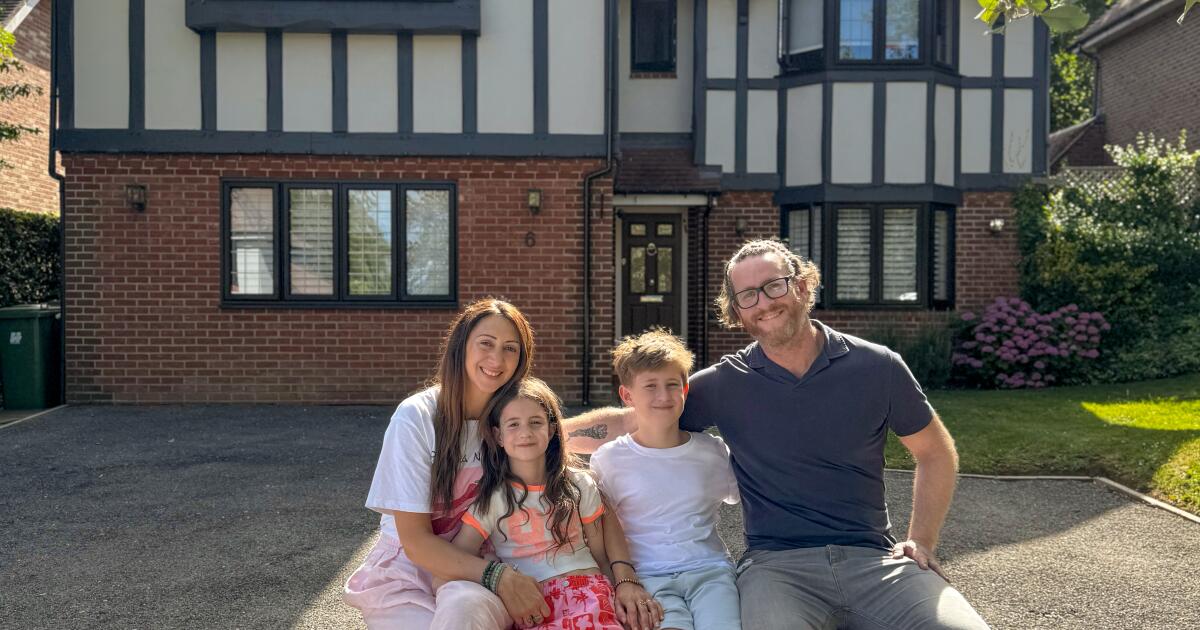
The combined Ward, Beckett and Mayor families at the Emu Plains house they are in the approval process for a knock down and rebuild. Picture: Glenn Campbell
NSW homeowners Martin Beckett – CEO and founder of registered charity Charity Christ Mission Possible, supporting vulnerable people in Western Sydney – and his wife Georgina are undertaking a knockdown‑rebuild to create a dual‑occupancy for their two children’s families (Tamica Ward with her husband and three children, and Timothy Beckett with his wife and two children) plus a one‑bedroom granny flat at the rear for themselves.
Driven by rising cost of living and property prices, Mr Beckett said he is “getting increasingly frustrated with government plans” not thinking outside of the box.
“If we get this over the line – it’s something that as an organisation I would like to champion,” he said.
Recent seller Jill McGrath and her husband Jim renovated their East Lindfield home adding stairs and a garage, in the 1960s.
MORE: How David Jones signed its own death warrant
Jill McGrath at her recently sold East Lindfield home. Picture: Jonathan Ng
Ms McGrath said there were many builds on the street, with continued demolitions today.
“The one across the street that’s just been pulled down,” she said.
Ray White Upper North Shore Agent Jessica Cao said there were a lot of developers looking at Ms McGrath’s site for knock-down-rebuild throughout its campaign.
“However, at the moment, with the construction costs being so high they are very hesitant in committing to a project,” she said.
“What we are seeing across the board developers are very conservative in making the offer or bid at auction.”
The Property Council of Australia revealed ABS building approvals data for April fell 3.4 per cent nationally, with a sharper decline in NSW dropping 9.5 per cent.
MORE: ‘What downturn?’ Rising prices in Sydney’s new Towers of Power
Lead agent Jessica Cao of Ray White Upper North Shore said many developers were interested in Jill McGrath’s recently sold East Lindfield home, however, many were hesitant in committing to a project due to rising costs. Picture: Jonathan Ng
Property Council’s Group Executive Policy and Advocacy Matthew Kandelaars said approvals are an important indicator, but delivery and project feasibility ultimately determine how many homes get built.
“Across April we continued to see rising cost pressures, global volatility and increasing speculation and uncertainty in the lead up to the federal budget, all of which influence how projects stack up,” Mr Kandelaars said.
“Softer approvals reflect a more cautious investment environment, higher costs and greater uncertainty.”
Property Council NSW Executive Director Katie Stevenson said approvals over the last 12 months showed the NSW housing pipeline remained fragile with 48,065 dwellings approved.
“Today’s data show the 12-month data again flatlining at fewer than 50,000 dwellings – nowhere near enough to meet the scale of housing demand across NSW – we need to build 75,000 dwellings a year to meet our target,” she said.
NSW suburbs with the highest number of demolitions FY to March Qtr 2026
SA2 Name Demolitions
Ryde – North 69
North Ryde – East Ryde 55
Oatlands – Dundas Valley 50
Panania (South) – Picnic Point 49
Ermington – Rydalmere 49
Revesby 47
St Ives 47
Chipping Norton – Moorebank 45
Caringbah South 45
Eastwood 44
Padstow 43
The Entrance 40
Baulkham Hills 40





 English (US) ·