
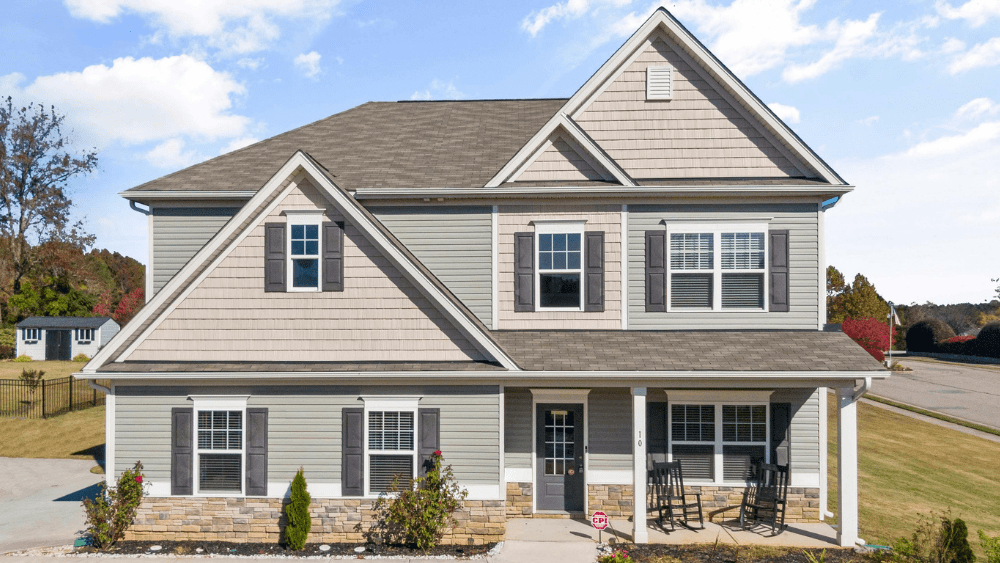
A house under offer in Logan Central. The median home price in the suburb is $1.12m, putting total costs at $2.225m over 30 years for a buyer with a 10 per cent deposit.
Queensland homebuyers are being slugged almost double the sale price of their properties once interest and stamp duty are factored in, leaving them saddled with debt for decades.
Homeowners buying with a 20 per cent deposit will pay about 90 per cent more than the contract price over the life of their loan, according to a shock analysis exposing the true cost of home ownership.
The alarming figures by financial experts Finder reveal a typical Brisbane house priced at $980,000 will ultimately cost buyers a staggering $1,866,337 over a 30-year loan term with a 20 per cent deposit of $196,000.
This includes $1,636,334.03 in repayments and an additional $34,003 in stamp duty.
Hidden costs in Burbank, where the typical house price sits at $3.375m, take the total pay out over 30 years to $6.84m, with a 10 per cent deposit.
A median-priced unit at $698,000 will set owners back a total of $1,307,872 over 30 years.
With a $139,600 deposit, repayments amount to $1,165,470.56, plus $2,801 in stamp duty.
Finder home loans expert Richard Whitten said the massive long-term costs highlighted the value of using an offset account or making extra loan repayments to get the debt down.
“Property prices are now so high that the interest most of pay over 30 years now is astronomical,” Mr Whitten said.
“If Australians are borrowing a million dollars to buy a house then a 7 or 8 per cent interest rate could ruin them.
“If inflation heats up again, rate hikes will be very tricky to pull off politically.”
The debt trap was even more acute for first homebuyers taking up the government’s recently expanded First Home Guarantee Scheme.
The scheme allows eligible buyers to enter the market with just a 5 per cent deposit and avoids costly lenders’ mortgage insurance (LMI) by having the government guarantee the remainder of a 20 per cent loan.
The total cost for a typical Bulimba house purchased at $2.06m with a 10 per cent deposit would be $4.17m
But Finder’s research revealed huge overall expenses over the life of the loan.
A first homebuyer purchasing a median-priced Brisbane unit at $698,000 could pay an additional $113,826 compared to a traditional 80 per cent loan.
For a typical house priced at $980,000, extra costs came in at $159,813 over 30 years.
Critics warned that while the scheme, expanded in October with removed income caps and a lifted property price cap to $1 million in Brisbane, increased accessibility, it came at the cost of unprecedented long-term financial exposure.
Finance broker Andre Dixon, of Inovayt, said most buyers were shocked when they learnt the full breakdown of costs.
“The price on the contract is just the starting point,” Mr Dixon said.
“Seeing the total interest over 30 years is usually the moment their eyes widen.
“Stamp duty also stings because it feels like money that gives you nothing in return.”
Inovayt finance broker Andre Dixon
MORE NEWS
Knockdown sells for $13m in sleepy seaside town
Hi-5 star’s transformation after quitting fame
Construction crisis: Shock hike predicted for building costs
Mr Dixon said he spoke with clients about building a savings buffer, as the First Home Guarantee helped buyers into the market sooner, but with a big trade-off — “higher repayments and less breathing room if rates move”.
“Buying a home is a long game.
“The people who do best are the ones who understand the full picture up front and plan for the bumps along the way.
“Don’t just look at what you can afford today, think about what happens if rates rise or your income drops. Kids, job changes, time off work — these things matter,” he said.
Real Estate Buyers Agents Association of Australia (REBAA) president Melinda Jennison said new buyers “consistently underestimate the ongoing cost of holding a property”, including the difference between principal-and-interest and interest-only repayments.
Brisbane buyers agent Melinda Jennison. Pic: Supplied
Ms Jennison said many first-home buyers were taking on higher loan-to-value ratios, as demand for sub-$1m homes had spiked, partly in response to the government’s scheme.
“Most buyers are technically aware they’re taking on a bigger mortgage and possibly a longer term, but emotionally the priority is simply getting a foot in the door before prices move further out of reach,” she said.
“We’re seeing more first-home buyers willing to compromise on the type of property, for example, choosing attached dwellings, especially two-bedroom units in inner and middle-ring suburbs, just to get into a good location sooner.
“We’re also seeing more parental help in the background, whether that’s a lump sum contribution, a gift of a deposit, or parents unlocking equity to help their children into the market.”
This Surfers Paradise unit is priced at $750,00, well under the $1m first-home buyer threshold on the Gold Coast
Ms Jennison said first-home buyers were employing a range of strategies to offset their debt, from cutting back on lifestyle expenses like holidays, to delaying home renovations or renting out a spare room.
“Despite these challenges, it’s important to remember there are meaningful rewards on the other side of that commitment.
“Well-chosen Brisbane properties have the potential to deliver strong long-term capital growth, and for owner-occupiers the capital gain on the family home is generally tax-free.
“So the decision is always about weighing up the risks and short-term sacrifices against the long-term benefits of building equity and creating future financial security,” she said.
Mr Whitten said property prices had continued to soar, despite housing affordability becoming, “one of the greatest policy and economic challenges of our age”.
“You would think that the real costs of home ownership and borrowing are so high now that this will eventually drag prices down or at least lead to a long period of stagnation.
“But people have been saying this for 15 years or more. And prices have simply continued to rise.”






 English (US) ·