
People looking to sell their homes often encounter two terms that both try to convey the value of their house: market value and appraised value. In real estate, these have distinct meanings, and it’s helpful to understand the difference.
When you decide that you want to sell your house, you might use a tool like HomeLight’s Home Value estimator to get a ballpark idea of its market value and how much you could ask for it, or work with a top agent to develop a pricing strategy for putting your home on the market.
Want a Peek at Your Home's Value?
A great starting point is HomeLight’s Home Value Estimator. We’ll pair your answers to a few questions with housing market data from multiple trusted sources for a real-world estimate in under two minutes.
However, if a buyer’s lender orders an appraisal of the property, and the appraised value is lower than the asking price, the deal could fall through.
So, what’s the difference between market value vs. appraised value in real estate? Let’s take a deeper dive into what each term means and how it affects the sales price.
Market value vs. appraised value: Where they play a role in the transaction
To truly understand how these two figures interact, it helps to look at a typical home sale timeline. They don’t compete at the same time; instead, they act as a tag team throughout the transaction.
- Phase 1: The journey begins entirely in the realm of market value. A seller looks at recent neighborhood trends to set a listing price. Buyers tour the home and submit offers based on what they perceive the home is worth in the current market. After some back-and-forth negotiation, the buyer and seller agree on a fair market purchase price and sign the contract.
- Phase 2: Once the contract is signed, the market value is officially set for this specific transaction. The buyers submit this contract to their mortgage lender to finalize their loan.
- Phase 3: Now, the lender steps in and orders the appraisal. The appraised value is a lagging indicator; it relies on finalized historical data to objectively verify the home’s worth. This number takes center stage during the final underwriting and closing process, ensuring the bank is making a safe investment before they officially fund the loan and hand over the keys.
Understanding a home’s market value
The market value of a home is the price buyers are willing to pay for a house, and varies over time depending on prevailing market conditions. It is not the listing price. Michelle Queen, a top real estate agent in Cartersville, Georgia, with 22 years of experience, puts it bluntly: “The market value is what the home is actually worth.”
Factors used to determine the market value of a home
Comparable sales
Comparing sales prices is a big factor in determining a home’s market value. Real estate agents do this by running a comparative market analysis (CMA). “When I’m running house values, I’ll look at what’s sold in the same subdivision or within a mile, and compare prices with properties that are similar to the client’s property,” says Queen, helping her make an educated determination of the home’s market value.
Supply and demand
Like any other commodity, the laws of supply and demand apply to real estate. When the housing market has low inventory, and there are more interested buyers than there are homes for sale, that establishes a seller’s market.
A property’s features, amenities, and condition
Placing an accurate value on a home is tricky because they are all unique. If a home is turnkey, has a spacious laundry room, amazing curb appeal, and beautiful hardwood floors, it could be more valuable to buyers than a house without those features, even if other factors, such as a home’s age or its number of bedrooms, are identical. An experienced agent will know how to understand and balance these factors when setting a listing price.
Even in a new construction community where all the houses are built exactly the same, the properties will change over time. Some homeowners will make improvements, while others will do the bare minimum or keep things the same as the first day they moved in. Then you’ll have some who neglect basic maintenance tasks, leading to depreciation. All of these things will affect the home’s market value.
Note: Queen advises that before doing any new projects to your property to increase its value, work with a top agent to create a plan that highlights upgrades and finishes that buyers actually want, instead of wasting money on things buyers aren’t interested in and won’t increase the selling price of your home.
Understanding a home’s appraised value
If a home’s market value is determined by what buyers are willing to pay for a home in a free and open market, then what is an appraised value?
Appraised value is what your home is worth according to a professional, licensed appraiser.
What goes into an appraisal?
Appraisers are trained and licensed professionals who are required to follow the uniform standards for valuing homes. Like a real estate agent, they use a comparable sales method, along with an on-site visit to get a firsthand look at the property. They’ll submit a Uniform Residential Appraisal Report to the bank to review.
The report is broken down into sections and covers a variety of internal and external factors that impact the property’s value. Some of the factors appraisers take note of include:
- Neighborhood – legal boundaries, price range, price trends (increase, decline, stable)
- Home condition – year built, type of foundation, type of heating/cooling, design style
- Sales comparison approach – a comparison of your house to similar homes
- Cost approach to value – the cost to build a new home from scratch with the same features on the same plot of land
When do appraisals matter?
An appraisal is required by a lender to verify that the house is worth at least the asking price. Ken Dicks, the Director of Appraisal Compliance & Initiatives at Reggora, explains further: “Banks and government agencies are required by regulation to obtain appraisals or other written valuations when extending credit for real estate transactions. This is done to protect the banks and agencies from taking on collateral risk, in the sense that they would not want to extend a loan that is worth more than the property itself.“
What happens if there’s a difference in market value vs. appraised value?
Scenario 1: There’s a value shortfall
In the event of a value shortfall, where the appraised value is less than the contract price, the following paths are possible:
- The lender may allow the borrower to submit a reconsideration of value to the appraiser, requesting the appraiser to consider additional, relevant information. The lender will have specific processes and content guidance that will need to be followed. There is no guarantee that any information provided to the appraiser will result in the issuance of a revised appraisal. In fact, most reconsiderations of value fail, due to the inability to provide relevant factual discrepancies or market data that would warrant a change by the appraiser.
- If the contractual terms of the agreement for sale permit, the buyer and seller may renegotiate the sale price. Provided this is allowed by the terms of the contract, if the mortgage amount gets reduced, the buyer may contribute additional compensation to make up the difference.
“The purchase contract is dissolved when either an appraisal or financing contingency cannot be met,” explains Dicks.
Scenario 2: When appraised value exceeds market value
What happens if the appraisal comes back higher than your agreed-upon purchase price? While a low appraisal creates a stressful “appraisal gap,” a high appraisal is the ultimate win for a homebuyer.
If you agree to buy a home for $400,000, but the licensed appraiser values it at $415,000, two major things happen:
- Instant “Built-In” Equity: Equity is the difference between what the home is worth and what you owe on it. Because the purchase contract locks in your price at $400,000, that extra $15,000 in value belongs entirely to you on day one. You have essentially walked into a windfall of wealth without paying a dime extra for it.
- A Relieved Lender: Lenders are risk-averse; they want to know that if a borrower defaults on their mortgage, the home can be sold to recover the losses. A high appraisal gives the lender a deep cushion of security. It proves that their loan-to-value (LTV) ratio is even safer than initially calculated, making the underwriting process smooth sailing.
Note: The seller cannot back out of the contract or demand more money just because the appraisal came back high. The contract price is legally locked in.
Homeowners can contact an appraiser to do a pre-listing appraisal to determine the market value of their property before putting it on the market. This is a good option if your property is unique or there aren’t any comps in the area with which to perform an accurate CMA. The appraiser can use alternative valuation methods like replacement cost valuation or income valuation approach (an appraiser will use the income the property generates and divide that by the capitalization rate to get an estimated fair value) to get an accurate value.
Ok, then what is an assessed value?
You have the market value and appraisal value, but there’s also a third way in which property values are routinely assessed. This is the assessed value, and its purpose is to calculate property taxes.
The assessed value will almost always come in lower than the house sold for because it’s derived from a percentage of the market value. Unlike appraisers, who value each property individually, assessors must adhere to state laws that have value limits based on the property’s location.
If you feel that your assessed value is too high, and you’re paying a higher-than-expected tax bill, you might be able to appeal the assessment. Many states have laws that prevent assessed values from increasing too quickly and correct the assessed value in declining markets.
When it comes to market value vs. appraised value in real estate, there are a lot of factors at play. Your agent can walk you through all of the nuances for valuing your property, but you can get a head start by using HomeLight’s Home Value Estimator to see how much your home could be worth.
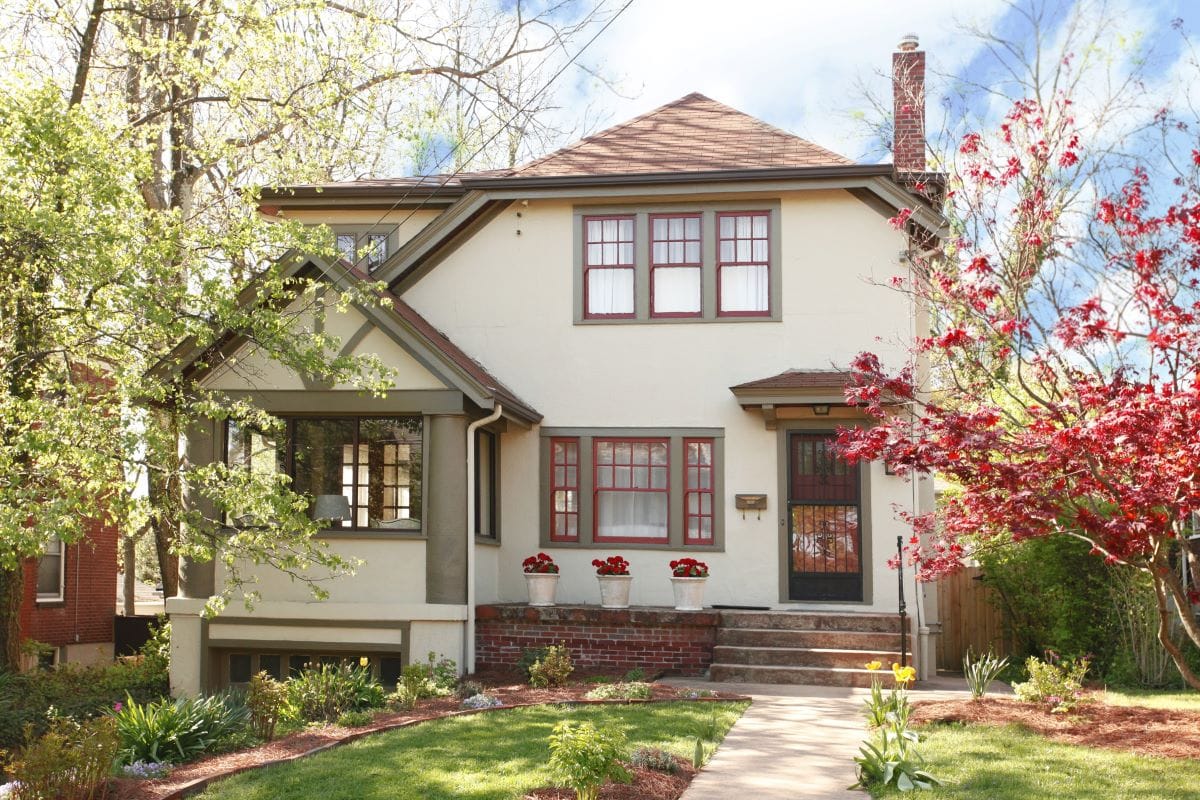
Header Image Source: (Jacques Bopp / Unsplash)









 English (US) ·