
If you’ve owned your home for a while, there’s a good chance it’s gone up in value, maybe more than you expected. That increase means you could be sitting on a solid amount of home equity. Homeowners across the country are in the same boat, with trillions in total home equity. You might be wondering how to tap into that built-up housing wealth, asking yourself, “How do I get a home equity loan?”
A Quick (And Free) Way to Check Your Home Value
Get a preliminary home value estimate in as little as two minutes. Our tool uses information from multiple sources to give you a range of value based on current market trends.
If you’re planning to make home improvements, consolidate debt, or cover other expenses, a home equity loan can be a valuable source of funds. In this guide, we break down the steps you’ll need to take to unlock your home equity, explain how long it might take to get your money, and share some home equity pitfalls to avoid.
What is a home equity loan?
A home equity loan allows you to borrow against the value of your home minus what you still owe on your mortgage. Lenders typically provide these loans in a lump sum, which you then repay in fixed monthly installments over a set period, much like your primary mortgage.
The amount you can borrow is based on your home’s current value and the equity you’ve built, which increases as your mortgage balance goes down and property values rise.
How does a home equity loan work?
When you take out a home equity loan, the lender assesses the equity in your home. Generally, you can borrow up to 85% of your home’s value, minus your outstanding mortgage balance.
For example, if your home is worth $300,000 and you owe $200,000, your available equity may allow you to borrow up to $85,000. The loan is then repaid over a period of five to 30 years with a fixed interest rate, making it easier to budget your payments.
Some lenders may allow you to borrow more than 85% of your home’s value, depending on your property, credit history, and lending situation.
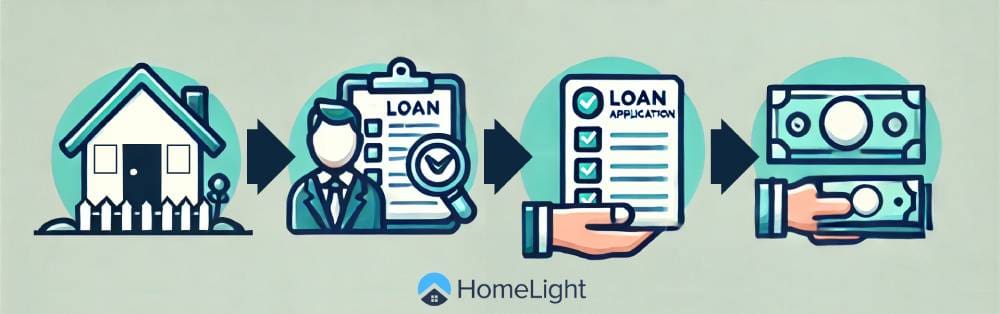
How do I get a home equity loan?
Getting a home equity loan involves several steps, but it’s a straightforward process. Here’s what to expect:
1. Assess your home equity
Start by calculating how much equity you’ve built in your home. Most lenders require you to have at least 20% equity to qualify, while some lenders allow for 15%. To estimate your equity, subtract your current mortgage balance from your home’s market value. The higher your equity, the more you can potentially borrow.
2. Check your credit score
Lenders will review your credit score to determine your eligibility and interest rate. A score of 620 or higher is generally needed, but a higher score (660 or 680) could help you qualify for better rates. If your score needs improvement, you can build credit fast by paying down debt or disputing any errors on your report before applying.
3. Gather financial documentation
Be prepared to provide documentation, such as proof of income, tax returns, and details of your existing mortgage. Lenders need to confirm your financial health and ability to repay the loan. Having these documents ready can speed up the application process.
4. Shop around for lenders
Different lenders offer varying interest rates and terms, so it’s smart to compare your options. Look at banks, credit unions, and online lenders to find the best deal. Pay attention to loan fees, terms, and customer service reviews.
5. Submit your application
Once you’ve chosen a lender, complete the loan application. Be honest and thorough with your information. The lender will review your application and order an appraisal of your home to verify its current value.
6. Review the loan terms
After approval, carefully review the loan’s terms, including the interest rate, repayment period, and any fees. Ask questions if anything is unclear, and make sure the loan fits within your budget.
7. Close the loan
If everything checks out, you’ll move on to closing. At this stage, you’ll sign the final paperwork, and the loan funds will be disbursed. The time between application and funding typically takes a few weeks.
How can I use my home equity loan?
Home equity loans offer flexibility in how you can use the funds, including:
- Home improvements: Renovate your kitchen, update your bathroom, or tackle larger projects that add value to your home.
- Debt consolidation: Pay off higher-interest credit card balances and streamline your debt into one manageable payment.
- Education expenses: Cover tuition or other educational costs for you or your family.
- Major purchases: Finance a large purchase, such as a vehicle or a second home.
- Next home purchase: Get cash for a down payment or other expenses on your next home. This can make it easier to secure financing and cover upfront costs when buying a new property. Alternatively, you can use modern programs that also let you use your existing equity to buy before you sell, allowing you to move only once. (More on this later in our post.)
Top reasons people borrow against their home equity
According to HomeLight’s Lender Insights & Predictions for 2026 report, loan officers expect debt payoff to be the top reason people will use home equity funds in 2026. In the survey, 78% of lenders predicted borrowers would use these funds to pay off or consolidate debt, while 12% expected them to go toward home improvements and 4% toward buying another property.
How much are homeowners borrowing with equity?
The average home equity loan amount is slightly above $144,000, giving homeowners access to a significant amount of cash without selling their property. The amount borrowers can take out depends on factors like their home value, existing mortgage balance, credit score, and lender requirements.
Some homeowners borrow smaller amounts for projects like renovations or debt consolidation, while others tap into more equity for major expenses. Because home equity loans are secured by the property, lenders typically allow borrowers to access larger loan amounts than they might qualify for with unsecured financing.
How much does a home equity loan cost?
The average cost of a typical home equity loan is 2% to 5% of the total loan amount, but it can be as low as 1%, depending on the borrower, the lender, and the property.
The costs of the loan include:
- Interest: Your interest rate will be fixed for the life of the loan, but rates vary depending on your credit score and the lender.
- Fees: These typically include application fees, appraisal fees, and closing costs.
- Insurance: You’ll need to maintain homeowners insurance, and in some cases, lenders may require title insurance or other protections.
Be sure to ask about any hidden costs or early repayment penalties before signing.
How can I get a lower home equity loan rate?
To secure a lower rate, follow these tips:
- Improve your credit score: A higher credit score typically leads to better interest rates. Pay down debts and correct any credit report errors before applying.
- Compare multiple lenders: Don’t settle for the first offer. Compare rates from at least three lenders to find the best deal.
- Negotiate: Some lenders may be willing to lower their rates or fees if you ask. Don’t be afraid to negotiate.
How long does it take to get a home equity loan?
The timeline for getting a home equity loan can vary, but it typically takes two weeks to three months. Here’s a general breakdown:
- Application processing: It takes about one to two weeks for the lender to review your financials and approve the loan.
- Home appraisal: This step can take an additional week or two, depending on how quickly the appraisal is scheduled.
- Underwriting and approval: This may take two to six weeks, as the lender reviews your financial details, credit history, and home appraisal to make sure you meet their requirements.
- Loan closing: Once approved, the closing process usually takes one to two weeks, including signing documents and disbursing funds.
If you need the loan quickly, ask your lender about expedited options, but be prepared for higher costs.
What are the pros and cons of a home equity loan?
Before tapping into your home’s value, it’s important to understand what a home equity loan offers. While it can be a smart way to access cash for major expenses, it also comes with risks worth considering. Here’s a quick look at the pros and cons to help you decide if it’s the right move for your financial situation.
Pros
- Fixed interest rate and payments: You’ll have predictable monthly payments with a fixed rate for the life of the loan.
- Lump sum payment: Get the full loan amount in one lump sum, which can come in handy for big projects or major expenses. Most lenders let you borrow more than many other types of loans.
- Lower interest rates: Home equity loans often have lower interest rates than credit cards or personal loans.
- Potential tax benefits: You may be able to deduct interest payments if you use the loan for IRS-qualified home improvements or repairs.
- Longer repayment timelines: Home equity loans typically provide extended repayment options spanning up to 30 years.
- Flexible use of funds: The loan can be used for a wide range of purposes, from home renovations to debt consolidation.
Cons
- Foreclosure risk: Because your home is backing the loan, missing payments could put your property at risk of foreclosure.
- Added debt burden: You’ll be taking on a second mortgage, adding to your overall debt load.
- Strict equity requirements: Lenders will hold the line on minimum equity requirements. You may need to wait and build equity before you can take out a home equity loan.
- Closing costs and fees: Expect to pay fees, such as closing costs and appraisal fees, which can add up to several thousand dollars.
- Long-term commitment: Repayment periods can last up to 30 years, tying you to long-term debt.
- Weaker borrowing power later: Borrowing against your home reduces the equity you’ve built up, which may limit future borrowing options.
What are some home equity loan pitfalls to avoid?
A home equity loan can give you access to a large amount of cash, but it’s not a decision to take lightly. Since your home is on the line, it’s important to understand the risks before signing on the dotted line. Here are some common home equity loan pitfalls to watch out for.
- Fast-depreciating expensive items: Using home equity to buy things like cars or RVs can be risky because these items lose value quickly, leaving you with debt on something worth much less over time.
- Unnecessary luxury purchases: Tapping into your home equity for things like designer goods or pricey gadgets can turn short-term purchases into long-term debt.
- Extravagant holiday shopping: Tapping into your home’s value for things like holiday gifts can turn a one-time expense into years of loan payments.
- Extremely expensive vacations: Funding lavish trips with your home equity could mean paying for them long after the memories fade.
- Growing everyday expenses: If you rely on a home equity loan to cover monthly bills, it could be a sign of deeper financial issues.
- Stock market investment: Using home equity for speculative investments is risky, as market downturns can leave you with both a loan and losses.
- Inexperienced investment property purchase: Without knowledge of the real estate market, using equity for an investment property could backfire.
- Educational costs: Explore scholarships, grants, and federal student loans before using home equity to pay for education.
How can I estimate my home equity?
To estimate your home equity, follow these steps:
- Check your home’s current market value: Use online valuation tools, such as HomeLight’s Home Value Estimator, for a preliminary estimate, or consult a professional appraiser or real estate agent for a more accurate assessment.
- Subtract your mortgage balance: Take the market value of your home and subtract the amount you still owe on your mortgage. The difference is your home equity.
- Consider recent sales in your area: Reviewing comparable home sales can help you estimate your home’s value more accurately and give you a clearer picture of your equity.
»Learn more: Skip the complicated calculations and get a quick answer with our Home Equity Calculator. Find out how much equity you may have built without doing the math by hand.
How can I grow home equity?
Building home equity takes time, but here are a few ways to accelerate the process:
- Pay down your mortgage: The more you pay toward your mortgage principal, the more equity you build.
- Make extra payments: Adding a little extra to your mortgage payments each month can help reduce your principal faster.
- Increase your home’s value: Consider home improvements or renovations that boost your property’s market value.
- Wait for appreciation: As your home appreciates in value over time, so does your equity. Staying in your home for the long term can help maximize appreciation.
Small upgrades, big equity: Increasing your home’s equity isn’t just about paying down your mortgage. It also involves boosting your property’s value over time. Strategic improvements and market trends both play a role. To learn more ways to grow your home’s equity, see our post, What Makes Your Property Value Increase? 12 Key Factors to Watch.
Can I use a home equity loan to buy my next home before I sell?
Yes, you can, but it’s not your only option. If you want to use the equity in your current home to help buy your next one before you sell, HomeLight’s Buy Before You Sell program can help you make the move without having to wait for your current home to sell first.
This financing option allows you to unlock your equity to make a strong offer on your new home while avoiding the stress of timing the sale of your current home.
HomeLight’s program gives you more flexibility to make your move on your own timeline. Instead of rushing to sell first, you can move once and make the transition to your new home a lot smoother.

Watch the video below to learn how HomeLight Buy Before You Sell works:
Other helpful tools offered by HomeLight:
- Find a Top Agent
- Home Value Estimator
- Agent Commissions Calculator
- Home Affordability Calculator
- Net Proceeds Calculator
- Best Time to Sell Calculator
Should I borrow against my home equity?
Using your home equity to borrow money can be a smart move if you need cash for things like renovations, debt payment, or other major expenses. But it’s important to make sure you’re borrowing an amount you can comfortably pay back and understand how it could affect your finances down the road.
Before taking out a home equity loan, look at your budget, weigh the pros and cons, and make sure it fits your goals. It also helps to know how much your home is worth, since your equity and how much you can borrow depend on your home’s value. If you’re unsure, consult with a financial advisor or lender to help you determine the best course of action.
To get started, try HomeLight’s free Home Value Estimator to get a ballpark estimate in less than two minutes.
Header Image Source: (Demure Storyteller / Unsplash)









 English (US) ·