
As energy prices continue to bite, homeowners are looking for simple ways to make their homes more energy efficient.
According to Energy.gov.au, up to 40% of a home’s heating energy can be lost through windows during winter and in summer, almost 90% of heat is gained through windows.
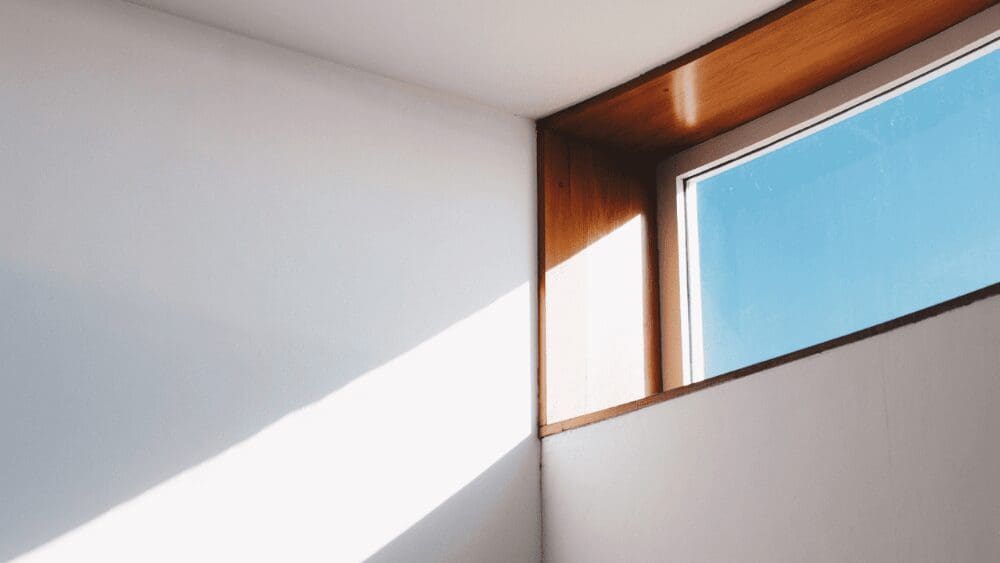
Windows without curtains or blinds are responsible for huge amounts of heat transfer. Picture: Dylan James for Buildher Collective
While double-glazing or triple-glazing is the gold standard for improving the energy efficiency of your windows, this is a significant investment. If you’re looking for something cheaper and easier, simply choosing the right curtains and blinds makes a huge difference to your home’s thermal performance, keeping your home more comfortable and your energy bills lower.
Can curtains and blinds actually improve a home’s energy efficiency?
The right curtains and blinds can improve your home’s thermal efficiency but if lowering energy bills is your goal, it’s important to look at not only the types of window furnishings to buy but also the best ways to install them.
Dean Dragonetti, Director at Shadey.com.au, a leading Australian curtains and blinds retailer, said any layer of protection to your windows will help but the right products can make all the difference.
We spoke to the experts at Shadey about which window furnishings they recommend.
Best curtains and blinds for energy efficiency
Here are Shadey’s top recommendations for the types of curtains and blinds to keep your home warm in winter and cool in summer, including honeycomb blinds, thick blackout curtains, and even thicker roller blinds.
Honeycomb blinds
Honeycomb blinds, also known as honeycell blinds, are the best blinds for energy efficiency.
Honeycomb blinds have a unique hexagonal cell design that traps air, creating a layer of insulation similar to an igloo. This reduces heat loss through your windows, and some people even say they can help reduce external noise.
Honeycomb blinds from Shadey feature 25mm cells that trap air making them great for energy-conscious home owners. Image: Supplied
Shadey says these blinds have had a recent surge in popularity as people become more conscious about creating energy-efficient homes, both for environmental and monetary reasons.
While blackout honeycomb blinds are the best for thermal insulation, light filtering honeycomb blinds also offer great insulating properties and increase privacy without removing light.
Mr Dragonetti added that Shadey’s range of blackout honeycomb blinds has an aluminium lining, further increasing their insulating properties.
Shadey's honeycomb blinds are easy to install yourself and have a minimalist design. Picture: Supplied
He said Shadey’s 25mm honeycomb blinds are a great choice for those looking for a minimalist design, as they fold up tightly when closed because it is the air creating the insulation pocket, rather than thick material.
Blackout honeycomb blinds are a great choice for bedrooms as they are secured to the top of the window frame (rather than on the side like some roller blinds), meaning the fabric can sit very close to the edge of the window, to eliminate as much light as possible.
Blackout curtains
Blackout curtains are another great option for increasing the energy efficiency of your home as the thicker fabrics trap cold air behind them, and also reduce any draughts around your window.
Shadey recommends installing blackout curtains wall-to-wall and floor-to-ceiling to reduce outside temperatures from entering your home as much as possible, with the added benefit of it creating a design statement.
Buildher Collective's Jessie St project featured Shadey's lined-sheer curtains which feature a blackout backing. Picture: Dylan James for Buildher Collective
Mr Dragonetti said many customers also like their lined sheer curtain range, which loosely stitches a sheer curtain fabric to a blackout lining. This is a great option if you have sheer curtains elsewhere in your home and want to continue using the same fabric or if you just prefer the look of sheer fabrics and want the benefit of blackout curtains.
If you do want a sheer curtain, the team at Shadey also suggest layering curtains with a sheer curtain closest to the room and a blackout curtain behind. These are sometimes called double curtains.
Roller blinds
Roller blinds can also be a great budget choice for thermal insulation, but choosing the right fabric and installation method is important.
Shadey recommends choosing a blackout roller blind with a thermal foam coating. This increases the thickness of the blind ever so slightly and enhances its energy efficiency properties.
Mr Dragonetti said their Margot blackout roller blinds are a popular fabric choice with this feature.
Even the right choice of roller blind can make a difference to your home's energy footprint. Picture: Supplied
To increase energy efficiency, it’s important to choose an installation style that reduces any gaps between the wall and the blind as much as possible. Depending on your windows, one of the best ways to do this is to install the blind with a face-fit and a backwards roll. If you’re unsure, Shadey offers support via live chat, email and phone to help you make these decisions.
How to choose the right curtains and blinds
There are lots of options for increasing the thermal efficiency of your home with window furnishings. Here are our top picks depending on your priorities.
- Best high-impact design option: Sheer-lined curtains or blackout curtains
- Best minimalist design: Honeycomb blinds or roller blinds
- Best for thermal efficiency: Honeycomb blinds
- Best budget option: Roller blinds
Are energy-efficient curtains and blinds worth it?
Shadey says that yes, investing in quality Australian-made curtains and blinds is great for those looking to increase the thermal efficiency of their home.
Creating an energy-efficient home is all about finding small ways to improve. Making smart choices for window furnishings is an easy way to get started.
This article was originally published on 4 May 2026 at 2:57pm but has been regularly updated to keep the information current.







 English (US) ·