
In the summer of 2014, Cyrus Bolooki was doing what he’d spent the better part of two decades doing — playing drums with New Found Glory, traveling from city to city during another long, brutally hot summer. But at some point between soundcheck and showtime on that year’s Warped Tour, he found himself in a different kind of conversation.
Ska-punk band Less Than Jake was also on that year’s tour, and Bolooki had gotten word that the band’s frontman, Chris DeMakes, was a licensed real estate agent in Florida. Bolooki pulled DeMakes aside and asked him what it was like to have a second gig selling houses.
What started as a casual backstage exchange quickly turned into a practical career pivot. DeMakes walked him through the basics: how licensing worked, what the business looked like and why it might make sense for someone whose primary career depended on touring schedules and unpredictable income. The idea stuck, and Bolooki got his license shortly after.
“What’s the downside? It’s just some fees and some studying. If I really don’t like it, I won’t do it,” Bolooki said to Inman, while also noting that his wife Debbie, a longtime Florida agent and now his business partner, had been nudging him in that direction as well.
The skills that traveled
More musicians have found their way into real estate than you might expect.
Across the pop-punk and emo touring circuit of the early 2000s, a number of former and current musicians have quietly built second careers in real estate — some while still actively touring, others after stepping away from the music business entirely.
Peter “PJ” DeCicco, who played guitar in the band Armor for Sleep, now runs a team at Compass in Essex County, New Jersey, where his average sale tops $1 million. Darren Wilson, the drummer of The Hush Sound, is building his real estate practice in the Nashville area.
For many touring musicians, the transition isn’t as surprising as it sounds. Life on the road rarely translates into financial security, even at a relatively high level of success. DeCicco recalls one tour after which the final accounting left the band tens of thousands in the red.
“My ego was gone at that point. I just wanted to do something where I could provide for myself. That DIY ethic — I’m gonna do it on my own, I don’t need the big label — that energy translated.”
— PJ DeCicco, Armor for Sleep · Compass, Essex County, N.J.
When Armor for Sleep wound down in 2009, he found himself in his mid-20s without a degree, without a clear path forward, and briefly delivering newspapers at four in the morning while trying to figure out what came next. Real estate offered something he felt could be a natural next life and career step: low barrier to entry, no income ceiling and no micromanaging boss.
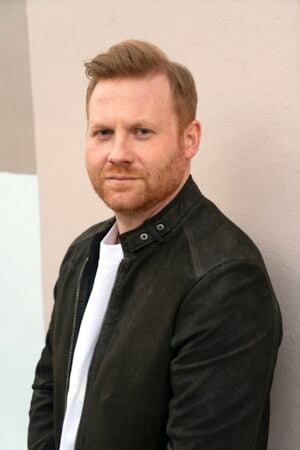
Peter DiCicco
“My ego was gone at that point. I just wanted to do something where I could provide for myself,” DeCicco said. But the practical appeal wasn’t the only part that resonated. “You could be as unsuccessful or as successful as you make yourself. It’s all on you. That DIY ethic — I’m gonna do it on my own, I don’t need the big label — that energy translated.”
Wilson’s path was less direct but ultimately landed in a similar place. After the Hush Sound slowed down and a college stint in Chicago gave way to other ambitions, he eventually relocated to Nashville, started a family and got his license in late 2021, just as the city’s market was surging.
It took Wilson a couple of tries with different brokerages before landing at Real, where he finally found the right fit and the mentorship that came with it.
“The biggest struggle for everybody in this industry is maintaining consistency,” he said. “That’s not necessarily the type of freedom I think some people are looking for when they get into real estate.”
No ceiling, no safety net
For musicians who spent years building something from nothing, the appeal is pretty natural. Real estate offers a self-directed career with no cap on earnings and a familiar kind of grind, where each client is different, every deal is new and the brand you build is entirely your own.
“I just figured out that I had to start asking people questions about them. That translates directly to working with clients — really understanding them, and understanding the why.”
— Darren Wilson, The Hush Sound · Real, Nashville
The transferable skills run deeper than the hustle, though. Wilson traces a direct line between The Hush Sound’s post-show merch table and how he works with clients today. After every set, he’d spend time talking with fans — some excited, some unsure how to start a conversation — and learned to guide those interactions.
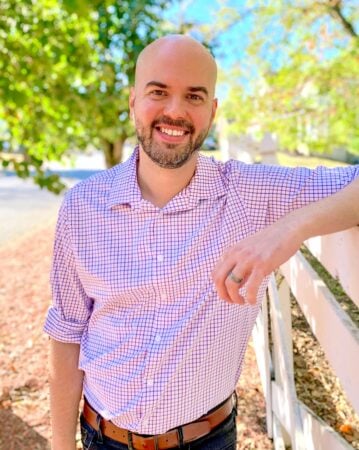
Darren Wilson
“I just figured out that I had to start asking people questions about them,” he said. “That translates directly to working with clients — really understanding them, and understanding the why.”
DeCicco points to something similar, rooted in the DIY ethos of the scene many of these musicians came from.
“Meeting different types of people — fans, promoters, people in truck stops — I had a wide variety of interactions,” he said. “On tour, you go to these venues and suddenly you’re very outgoing — you’re on. I think there’s a similar feeling with an open house or a listing appointment. There’s a performative aspect to it.”
While DeCicco and Wilson have transitioned primarily into real estate, Bolooki never left music. New Found Glory continues to tour and release new albums, with Bolooki balancing his music and real estate careers simultaneously.
For him, real estate started less as a necessity and more as a strategic addition. Based in Boca Raton, he works with Berkshire Hathaway HomeServices Florida Realty alongside his wife Debbie. While Debbie focuses on the vision side — staging, marketing, seeing a property’s potential — Bolooki handles contracts and the analytical end of deals. Some of his biggest transactions, he said, have closed while he was on the road.
“There are people who come to you because they know who you are, but you still have to show them you take this seriously. When or if the band winds down, I’m not going to be the brand new agent. I’ll have been doing it the whole time.”
— Cyrus Bolooki, New Found Glory · Berkshire Hathaway HomeServices Florida Realty
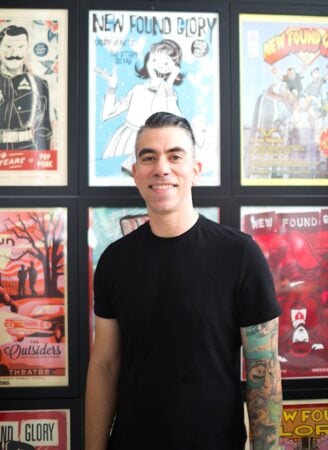
Cyrus Bolooki
DeMakes had given him one piece of advice early on that stuck with him: As a public figure, putting your contact information out in the open means fielding some calls from people who are more fan than client. Wade through them patiently, he explained, and real customers will follow.
Some of Bolooki’s most significant transactions have come from longtime New Found Glory fans who sought him out specifically, he said.
“There are people who come to you because they know who you are, but you still have to show them you take this seriously. When or if the band winds down, I’m not going to be the brand new agent. I’ll have been doing it the whole time.”
For all three, the draw is control — no financial ceiling and no safety net. Income is often uneven when first starting out, building a client base takes time, and the job often demands more availability than people expect at first.
“If you’re not taking initiative, you don’t have a business,” Wilson said.
For musicians accustomed to uncertainty, those conditions feel less like drawbacks and more like familiar terrain.
The scene they came from is in the middle of a well-documented revival — reunions, festival headlines, audiences showing up in numbers that would have seemed unlikely a decade ago. Wilson pulled up his Spotify stats mid-conversation: In the previous seven days, the Hush Sound had logged 77,000 listeners. Thirty-six percent of them were under 24 — born around the time the band’s first records came out.
The people who once bought tickets are now buying homes. For a growing number of musicians, it turns out the two worlds were never that far apart.







 English (US) ·