
Interstate investors are swooping on house-and-land packages offering more bang for their buck in Brisbane’s outer suburbs as South East Queensland’s property market becomes increasingly unaffordable.
They are also competing with first homebuyers for unit stock that was left on the shelf, with apartments in some buildings jumping as much as 44 per cent in price in a matter of months.
Independent valuer Herron Todd White’s (HTW) annual South East Queensland Property Overview reveals there has been a surge in interstate migration to the Logan-Beaudesert area, followed by Moreton Bay and the Sunshine Coast in the past 12 months.
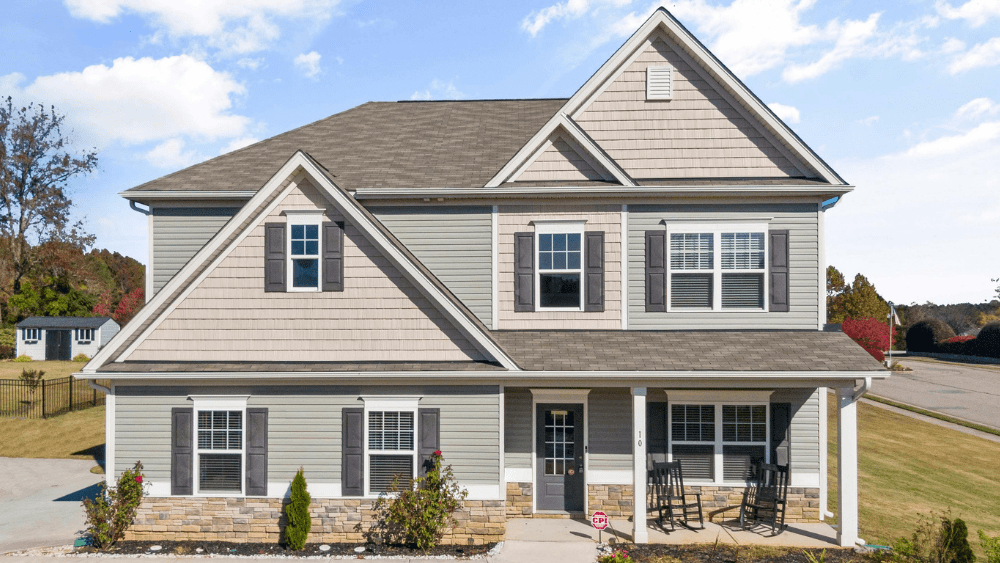
House-and-land packages are selling fast at Lilywood Landings.
MORE PROPERTY NEWS: ‘Did I make the right decision?’: 28yo buys motel for less than a house deposit
“We’re starting to see more interstate investors coming back into the market — particularly the house-and-land market,” HTW managing director commercial, government and agribusiness, Gavin Hulcombe, said.
“I think a lot of it is to do with price point. If you want to produce a new unit in a medium-rise, inner-city tower, you need to achieve about $20,000 a square metre, for middle ring, you need about $10,000/sqm, and for a house, you need a bit over $5000/sqm.
“So, if you look at what you get for your money, house and land delivers a relatively larger living area for a lower price point. For example, if you look at a 150 sqm unit in the inner-city versus a 150 sqm house in the suburbs, the price point is almost a quarter.”
This two-bedroom unit at 510 St Paul’s Terrace, Bowen Hills, recently sold for $800,000 – 44 per cent more than it sold for in July 2024. Image: Supplied by Herron Todd White.
RELATED: Aussie unit with no parking sparks buyer frenzy
‘First homebuyer frenzy’: $100k jump in six weeks
Housing estates in outer suburbs like Ripley, Lilywood, Narangba, and Park Ridge were seeing particularly high demand from investors.
Creation Homes general manager Peter Ryan said there had been strong demand from local and interstate investors for the project builder’s house-and-land packages across South East Queensland.
“The demand is much stronger than the supply available as investors compete with owner-occupiers who are favoured by land developers,” Mr Ryan said.
Peter Ryan, Creation Homes Queensland managing director. Image supplied.
“With near zero vacancy rates, strong yields and plenty of growth opportunity due to scarcity, South East Queensland makes a lot of sense to investors.”
Mr Hulcombe said Victoria’s tax reforms and the infrastructure spend happening in South East Queensland was also attractive to investors.
The introduction of the expansion of the federal government’s Home Guarantee Scheme had also fuelled price growth in the sub-$1m bracket, he said.
An aerial view of Kinma Valley near Naranga — one of the City of Moreton Bay’s newest masterplanned communities.
“Anything under $2m and above $5m is strong, but there’s still a gap in the middle,” Mr Hulcombe said.
“What we are seeing in the last month is some of those buildings built in 2016/17 that had underperformed for a long time and were very much investor stock have been performing really quite strongly.
“You do feel like FOMO has almost crept back in.”
This one-bedroom unit at 19 Hope St, South Brisbane, recently sold for $668,000 – 31 per cent more than it sold for in January 2025. Image: Supplied by Herron Todd White.
Challenger chief economist and former Reserve Bank of Australia official Jonathan Kearns said overseas migration to South East Queensland was also strong, and likely to continue to grow in the lead-up to the 2032 Olympic & Paralympic Games with demand for trades and other jobs.
Dr Kearns said the increase in investors coming back into the market was being driven by the growth in population and constrained supply.
“A lot of it comes down to ‘what else do you invest in?’ If you look at equities, they’re very highly valued, and with corporate bonds, the credit spread is low and a bit of a risk,” Dr Kearns said.
Challenger chief economist and former RBA official, Jonathan Kearns.
“(Property) actually looks like a pretty safe investment, even with only three or four per cent yields.”
Mr Kearns said getting a foot on the property ladder was still the biggest challenge facing the market as home prices grew faster than income and supply failed to keep up with demand.
“The disturbing thing is that we’re making very little headway in boosting construction,” he said.
“We’re a long way from those housing targets. We need the federal government to apply pressure to the states, and through the states, to local governments.”
He also said the next interest rate cut would not be until at least May next year — if at all.
“We’ve seen the last for quite some time,” he said. “We have to come to the realisation normal interest rates are not 2 per cent, they’re probably averaging 5 per cent.”







 English (US) ·