
At a time when homeownership remains aspirational for many, Sydney wealth manager Mark Welch has made a very different call: he rents the home he lives in, and says the numbers stack up better that way.
Mr Welch, 47, who is based in Surry Hills and runs financial planning firm EPG Wealth, said his decision is not ideological and not advice - just a personal financial choice shaped by the life he wants to live now, and the trade-offs he sees in taking on a very large mortgage.
“For me, it’s about the numbers,” he said. “Property is a good investment for certain people but not everyone. It’s an individual thing.”
Financial adviser Mark Welch rents his home and says the numbers stack up for his personal situation. Picture: Supplied
He rents a three-bedroom terrace that he estimates would be worth around $3.2 million if he were to buy it. But while that kind of property might traditionally be seen as something to stretch for, Mr Welch said the mortgage burden that would come with it simply does not make sense for him at this stage of life.
“It was categoric,” he said of the numbers he ran. “For me, it didn’t stack up.”
He could buy something cheaper, but chooses not to. Instead, he prefers to rent a home he likes rather than take on what he sees as an “astronomical mortgage” just to secure ownership in the same market.
For Welch, the turning point was looking past the emotional pull of ownership and focusing instead on cash flow, flexibility and what else that money could be doing.
“I want to enjoy my life now,” he said. “I want to travel. I want to do things. I want to spend time with my mates. I want to do adventurous stuff and have fun.”
Mr Welch invests the difference he'd pay on a mortgage, a move he stresses is key to being better off in the long run. Picture: Supplied
Rather than committing to a mortgage he views as restrictive, he prefers to direct his money into his business, superannuation and other investments, which he said are also more liquid and diversified.
That does not make him anti-property. He is quick to stress that his decision is personal, not prescriptive.
For some people, buying a home will still be the right call. But in his own case, he believes renting and investing elsewhere is the smarter fit.
Surry Hills in inner-city Sydney has a median house price of $2.5m. Picture: realestate.com.au
It comes as recent PropTrack data revealed a typical Sydney buyer at today’s prices will have to wait 13 years – until 2039 – for market rents to finally become more expensive than their repayments, at which point owning a home becomes cheaper than renting.
This constituted nearly half the length of a typical 30-year mortgage.
Discipline behind the strategy
The key, he said, is discipline: renting only works as a wealth-building strategy if the difference between rent and a would-be mortgage is treated as an intentional surplus and invested into alternative assets - not simply spent.
Earlier in his career, Mr Welch worked as a mortgage broker - an experience he says shaped the way he thinks about debt.
“Property’s very emotional,” he said. “Property is the centre of everyone’s universe here, but the debt situation is the issue.”
In Welch’s view, many people focus on ownership itself, rather than the debt required to get there - and its impact on lifestyle, stress levels and long-term financial flexibility.
He says the cultural script around buying can be so strong that people stop asking whether it genuinely suits their lives and finances.
“I’ll keep saying it - go back to the numbers,” he said. “And if you can’t do it, pay someone to do it.”
The double challenge facing most renters in retirement
The story of a financially literate professional renting by choice sits in stark contrast to the reality facing many Australians later in life.
Ashleigh Chang, an associate in Grattan’s Housing and Economic Security Program, said renting in retirement is often far harder when it is not a choice.
“The age pension gives you an adequate income as long as you own a home,” Ms Chang said.
67% of retirees who rent privately live in poverty after housing costs, according to the Grattan Institute. Picture: Getty
That is a crucial divide. Grattan’s recent ‘Renting in Retirement’ report found 67% of retirees who rent privately live in poverty after housing costs, while half have less than $25,000 in savings to fall back on.
Ms Chang said renters face a double challenge in later life: ongoing housing costs that homeowners are often free from, and a policy system that still treats the family home favourably – a combination that can leave older renters especially vulnerable.
“The family home is fully excluded from the age pension assets test,” she said.
That matters because wealth held in a principal home is treated differently from money held in super, savings or other assets.
Under the Age Pension assets test, a single person can hold up to $321,500 in assets if they own their home, or $579,500 if they do not. But she said that higher threshold does not outweigh the broader advantage of entering retirement without rent to pay, or of holding substantial wealth inside an exempt family home.
Ms Chang said insecurity is another major pressure.
“Renters can still be moved on,” she said.
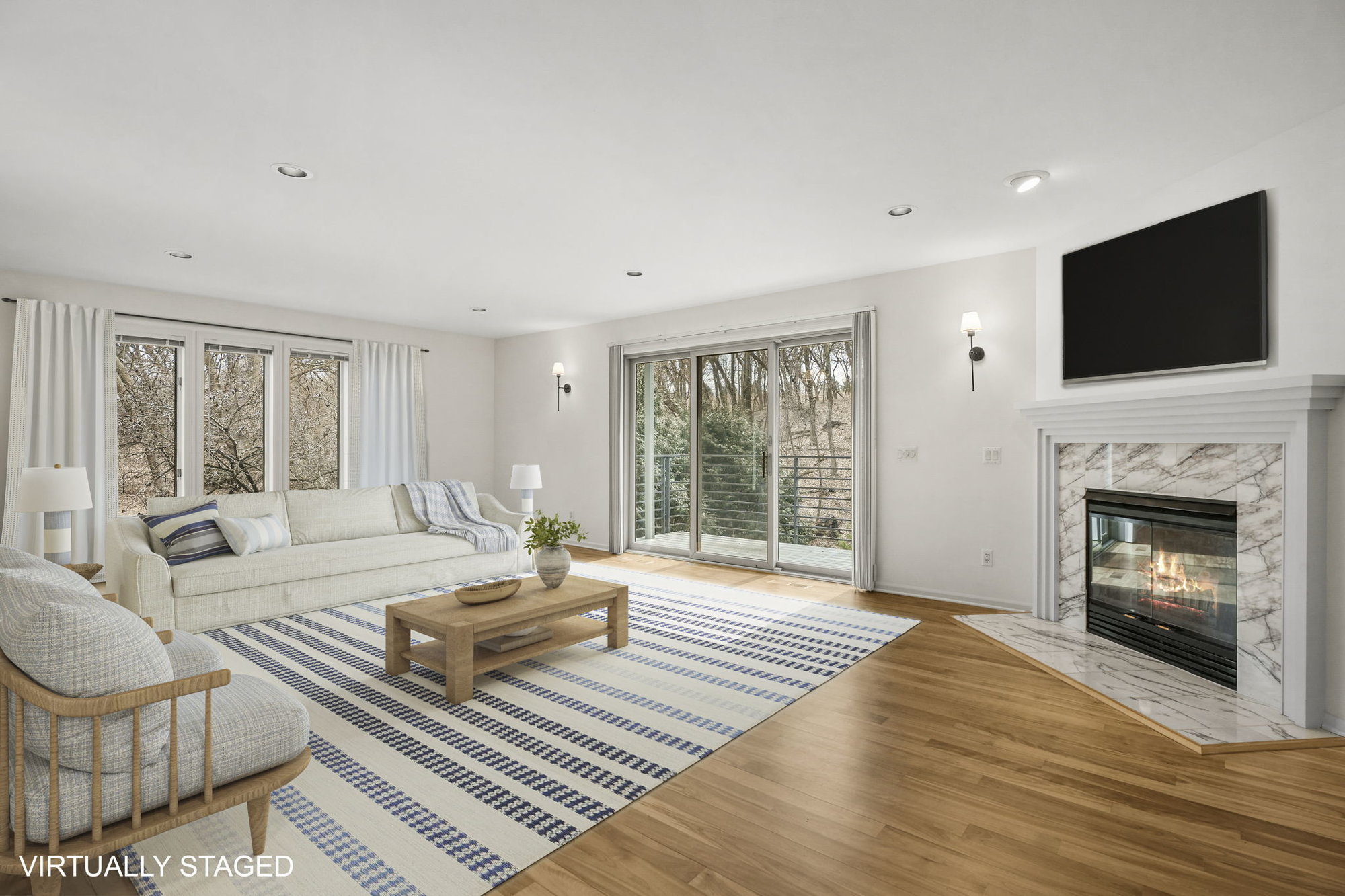
Renters face ongoing housing costs in retirement that homeowners who have paid off their mortgage are free from. Picture: realestate.com.au
That instability can be especially disruptive later in life, when older Australians are more likely to rely on established routines, local services and nearby community ties.
“When retirees fall into poverty, it tends to stick,” Ms Chang said.
More broadly, Ms Chang said homeownership is becoming less of an option for many Australians, and that for many older renters, this is not a choice at all.
Mr Welch is not claiming renting is better in every case - only that, in his case, it has become a deliberate financial and lifestyle choice. He may buy later. He may not. But for now, he is comfortable with the trade-off.



 English (US) ·