
Australia will need nearly a million new homes over the next decade, and industry leaders say greenfield communities are essential to meeting demand — but warn the system delivering them is no longer fit for purpose.
Speaking at the National Housing Solutions Summit in Melbourne on April 30, some of Australia’s largest residential developers said greenfield housing remains one of the few scalable ways to deliver family homes at pace. But rising costs, infrastructure delays and complex planning rules are increasingly threatening supply.
Stockland's Mike Davis, Frasers Property's Emily Wood and Ingenia's Michael Rabey speaking at the National Housing Solutions Summit in Melbourne. Picture: Supplied
Australia’s population is forecast to grow by 3.5 million people by 2036, with around 70% of that growth concentrated in Melbourne, Sydney, Brisbane and Perth, according to figures from the Australian Bureau of Statistics.
To house that growth, cities will need around 960,000 additional homes. Of those, about 440,000 are expected to be delivered in greenfield locations, particularly in outer metropolitan growth corridors.
Yet panellists warned that delivering those homes has become increasingly difficult.
The role of greenfield development
Industry leaders pushed back against the idea that greenfield housing, which is typically built on undeveloped land, is simply suburban sprawl, arguing it remains one of the only housing types capable of delivering affordability, diversity and scale at the same time.
Stockland executive general manager of masterplanned communities Mike Davis said greenfield areas now serve a much broader mix of buyers.
“Greenfield environments are diverse spaces,” Mr Davis said.
“The residents that live in these spaces have diverse needs. Greenfield plays a really important role in servicing those needs, accommodating both really affordable housing typologies and progressively more diverse housing typologies too – and it can do it at pace and scale.”
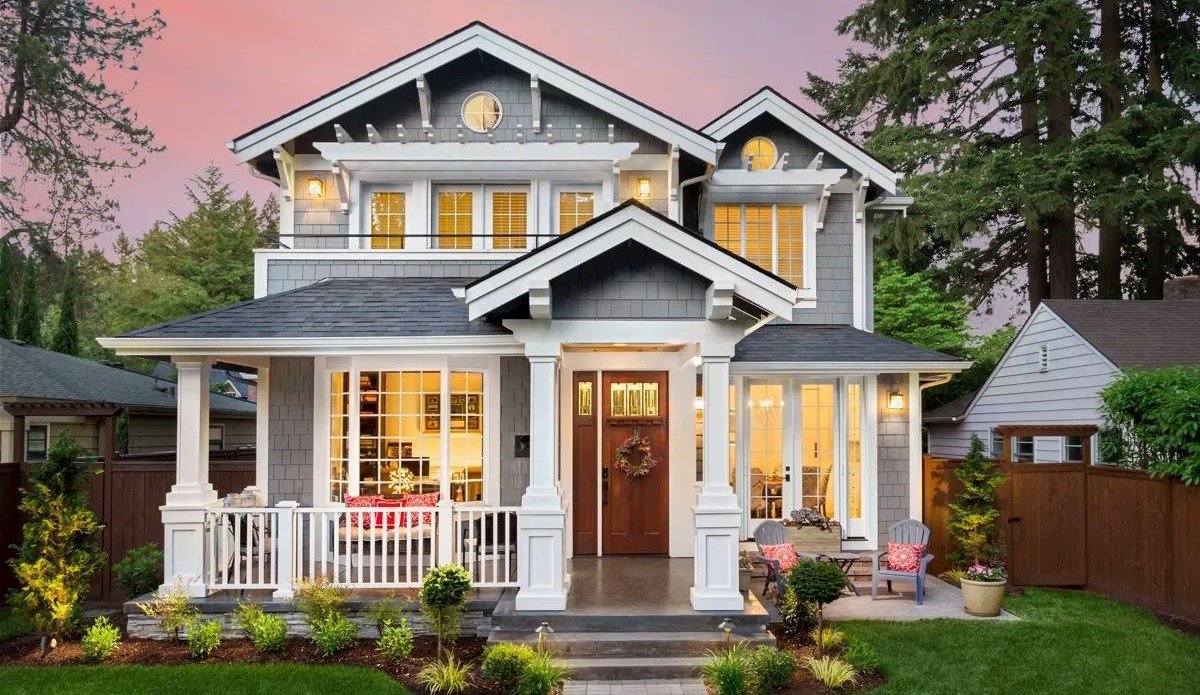
Industry leaders say buyers are increasingly prioritising affordability and certainty over size. Picture: Getty
Frasers Property executive general manager of development Emily Wood said that new developments provide significant opportunities for buyers.
“It’s not just about houses, it’s about delivering community outcomes, and I think that’s what’s great about greenfield [development] but also what also adds complexity about delivering it.”
For example, new developments on greenfield sites often have to account for infrastructure like new and expanded road networks. Amenities like community spaces, walkable shops, green spaces, and access to public transport are all integral to delivering a liveable community, not just a collection of houses.
When asked what the market is seeing, panellists said buyers are increasingly prioritising affordability and certainty over size, as construction costs and interest rates remain elevated.
“We are seeing people not only looking for the affordable option, but also certainty in what they’re buying,” Ms Wood said.
According to Mr Davis, this has also driven greater demand for more diverse housing typologies.
“There is a preference shift emerging into high-maintenance living across our portfolio to varying degrees depending on market geography [and] the global context but there is clearly a shift to great densification in greenfields,” Mr Davis said.
He noted Melbourne was singled out as leading the way, with planning frameworks that allow medium‑density housing to be delivered at scale in greenfield locations.
What’s slowing supply
Despite strong demand, speakers repeatedly pointed to planning delays and infrastructure sequencing as the biggest barriers to delivering greenfield housing.
Mr Davis described planning systems as opaque and fragmented, with outcomes often determined by conditions attached late in the process.
“A development approval is only as good as the conditions that come with it,” he said.
Infrastructure delivery was another pressure point, with panellists calling for earlier and more certain investment in roads, transport, schools and utilities to unlock housing faster.
“Perfection can come at the cost of certainty and delivery,” Ms Wood said.
“We can’t deliver housing without infrastructure, and we can’t create communities without that infrastructure so that sequence in working together is incredibly important.”
Are you interested in learning more about buying and building new? Check out our New Homes section.






 English (US) ·