
One bedroom granny flats are being rented out for up to $1400 a week, or a mind-blowing $72,800 a year, in some of Australia’s ritziest suburbs – a sign that the rental market is completely cooked.
The most expensive granny flat listing currently on the market is located in Sydney’s Vaucluse, where a “wonderful brand new granny flat” has been listed for an eyewatering $1400 a week.
The Vaucluse granny flat
Sure it has ocean views, direct access to Christison Park and comes fully-furnished but it is still a one bedroom granny flat!
Inside the Vaucluse granny flat
To put that price into perspective, the median asking rent for a house in Vaucluse is $2900 a week, according to the latest REA Market Trends report.
The floorplan for the Vaucluse granny flat
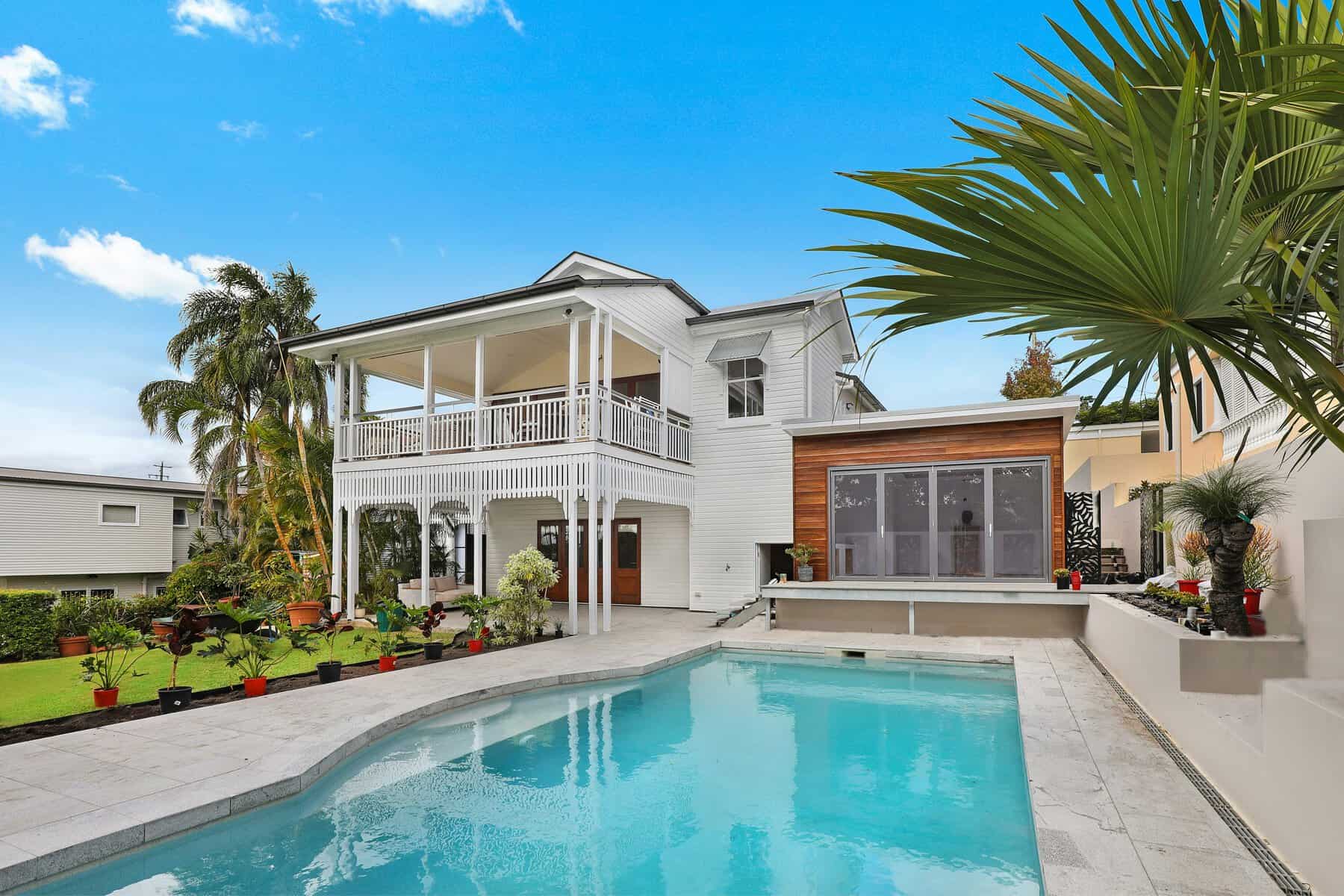
For that $1400 price you could also rent a house on the Gold Coast.
Another one bedroom granny flat in Dee Why, also in Sydney, is listed for $1000 a week, albeit all bills are included.
What a relief!
Listed for $1000 a week, the bills are included at this Dee Why granny flat
In Queensland, a one bedroom granny flat, which appears to be seperate from the main house, is listed for $750 a week in Montville on the Sunshine Coast.
That’s just shy of the median asking rent of $888 for a house in the hinterland suburb.
On the Gold Coast, a 100sq m, one bedroom “detached cottage” – also referred to as a granny flat – is listed for $780 a week in Bonogin.
“Drenched in natural light this contemporary cottage is graced with free flowing ultra-modern interiors and private outdoor area,” the listing says.
This Bonogin granny flat is listed for $780 a week
At Coolum Beach, a “freestanding cottage” is also listed for $700 a week but, as the listing says, “everything has been curated for you”.
“Whether you’re a professional relocating, a couple seeking a tranquil base, or a discerning short-stay guest, the cottage offers a warmth and quality rarely found in furnished rentals.”
The “curated” granny flat at Coolum Beach
In Box Hill in Victoria, a one bedroom granny flat, described as a “self-contained bungalow”, is listed for $550 a week.
“Gorgeous self-contained bungalow behind two person common house in Brunswick East!” the listing says.
“Unfurnished except for built-in bed + shelves. Electric over(sic)/stove present but no other white goods (room for fridge/dishwasher).
“You would have access to laundry in the main house for washing machine/dryer (do not have to enter house to access).
“Beautiful yard that is shared between the two properties.”
In South Australia, the most expensive granny flat currently listed is located in Stirling for $500 a week.
It is described as a “beautifully self-contained one-bedroom unit”.
Only a few years ago, $500 a week would have gotten you a house but now it gets you this granny flat in Stirling
Meanwhile in Tasmania, while not technically a granny flat, a “permanent van” with beach views is listed for $400 a week.
MORE NEWS: Over half of Aussies are now prepping their homes
How this feature could void your insurance
Aus warned: Six-rate hike shock is coming
This van in Tassie will set you back $400 a week
And it may soon get even worse, with Ray White AKG CEO Avi Khan warning his Brisbane-based team had seen a jump in investor appraisals by more than 150 per cent this week, with owners looking to get the most value out of their homes.
“So many investors are thinking of increasing rents,” he said.
The government’s latest federal budget announced negative gearing would now be limited to newly-built homes, along with a replacement of Capital Gains Tax discounts and the enforcement of a 30 per cent minimum.
These changes would be grandfathered in from July 2027 onward, meaning previously owned properties would be exempt from the new rules.
Ray White AKG CEO Avi Khan . Image supplied.
Mr Khan said while the new changes would keep young investors out of the market, current investors would double down on raising rent and increasing the property wealth gap.
“If tenants are going to pay more for rent, they’re less likely to save for a deposit,” he said.
“[Meanwhile], the previous generation got negative gearing for forty years and built property fortunes on it.
“I think what we need to encourage is more housing supply from the government. If you’re going to affect housing, the first thing you need to do is affect more supply.”
PropTrack senior economist Angus Moore said the Budget reforms to property investment taxation were the most significant in decades and would have a flow-on effect for buyers, renters, developers, and housing activity more broadly.
“Rental demand is elevated, rental affordability is at record-low levels and the rental market has a limited buffer,” he said.
“Policies that reduce investor participation, even modestly, carry a higher risk of tightening rental supply.
“The effect on the most affordable segments of the rental market deserves close attention.”
PropTrack senior economist Angus Moore
He warned that while the reforms to negative gearing and capital gains are designed to discourage investors and boost homeownership, renters may end up being the hardest hit.
“Around one third of Australians currently rent and many, whether through choice or circumstance, are not looking to buy,” Mr Moore said.
“This includes many lower income households, families, and older Australians, who are among the most vulnerable renters in a tight market.
“These changes come at a time of extremely challenging rental market conditions.”
While Australia’s national vacancy rate recovered from a record low of 1.05 per cent in February 2024 to reach 1.36 per cent in April 2026, it remains well below what is considered a “balanced market”.
“This has driven rental affordability to its worst level seen since at least 2008,” Mr Moore said.
New research conducted for investment platform Sharesies also revealed that 50 per cent of more than 1000 Aussie parents with kids under 18 surveyed by YouGov in April and May are anxious their kids will struggle to get their own home.















 English (US) ·