
Queensland real estate
Queensland property investors relying on artificial intelligence (AI) risked losing hundreds of thousands of dollars, with groundbreaking new research finding chatbots widely missed the mark on the state’s dynamic real estate market.
An inaugural report by financial services group MCG Quantity Surveyors exposed major failings in popular large language AI systems like ChatGPT.
Tasked with providing hyperlocal investment tips for best returns, the national study revealed AI remained woefully inept at simple information gathering, leading to dubious suggestions for locations and property types within a $1 million budget.
ChatGPT returned flawed data for half its property picks
Prompted to list suburbs matching key investment criteria, ChatGPT returned flawed data for half its picks, both nationwide and for Queensland.
The findings are significant given the rapid update of AI-powered tools. World Economic Forum polls show 48 per cent of investors across all ages in emerging markets are open to AI-assisted decisions, with half of Gen Z and Millennial users employing it for investment planning.
The study, using both a “basic” prompt and data-rich “deep research” workflow, found the latter tended to amplify the model’s bias rather than correcting it.
MCG founder Mike Mortlock
MCG founder Mike Mortlock said ChatGPT Pro returned errors in key metrics for its Brisbane picks of Bowen Hills, Woolloongabba/Dutton Park, and Redcliffe.
“In Brisbane, the main issues were less about poor suburb choices and more about how ChatGPT interpreted the data,” Mr Mortlock said.
“It consistently selected units despite a $1m budget that could easily have secured a detached house in the same locations.
“That bias toward higher-yield assets meant it overlooked stronger long-term capital growth opportunities.”
He said the AI used incorrect or mismatched data for details like days on market and 12-month price change, and placed too much weight on rental yield over fundamentals such as land value and supply pressure.
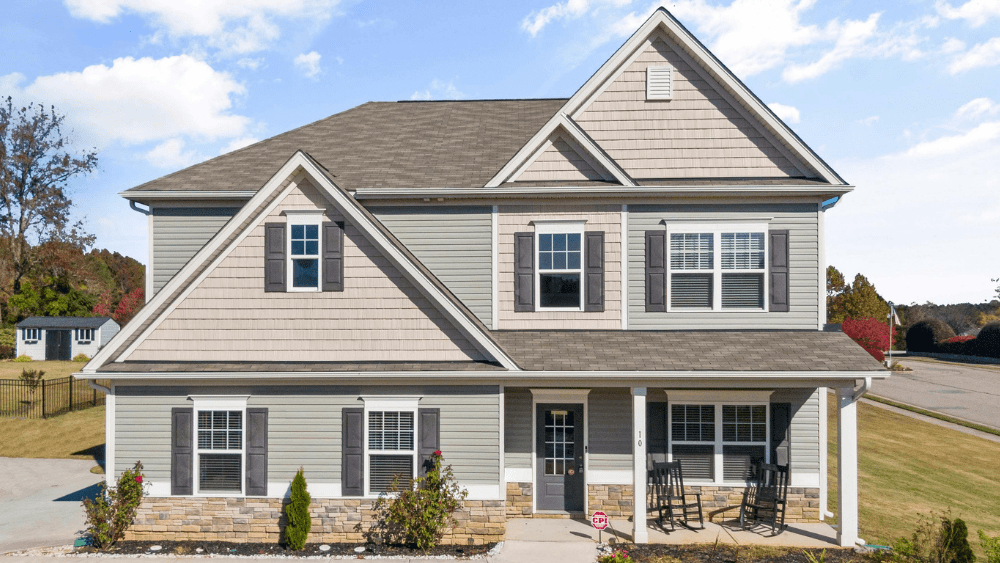
A three-bedroom house priced under $1m for sale at 143 Scarborough Rd, Redcliffe
“In short, ChatGPT did not pick bad suburbs. It picked the wrong type of asset. That is the difference between an AI reading a spreadsheet and a human reading the market.”
Mr Mortlock said the model was outpaced by Brisbane’s fast-moving entry-level market, where prices had moved $50,000 to $150,000 in just a month on the back of huge demand for the government’s expanded first-home buyer scheme.
“For houses sub-$1M you’re looking more to the fringes in Moreton Bay, Ipswich and the like.”
Paradoxically, ChatGPT’s most basic, free version returned better insights for Brisbane, with fewer errors in its output than for other cities.
The basic suburb selections were Woolloongabba (1-2 bedroom units), Chermside (2-bedroom units), and Albion (two-bedroom units).
Buyers’ agent Lauren Jones said investing was an art and a science
Brisbane buyer’s agent Lauren Jones said property investing required a nuanced approach AI couldn’t replicate.
“I always say that property investing is both an art and a science,” Ms Jones said. “When you take away the ‘art’ part, you run the risk of buying a property that isn’t suitable or in a location that may have issues such as socio challenges.”
She stressed the importance of local understanding: “Being able to walk around the neighbourhood and understand what people in this location want is a crucial part of a good investment.”
Despite its shortcomings, Ms Jones said AI was useful for gathering foundational information on demographics, employment hubs, local schools, and public transport.
Woolloongbabba units were recommended by both Pro and Basic versions of the LLM
MORE NEWS
Christmas rate cut hopes dashed as banks delay relief
Aussie job that’s killing relationships
‘Ridiculously underrated’: Investor snaps up 60 homes in 6 months
“If you still want to rely on AI, feed it information from credible sources as opposed to just scanning the entire internet,” she said.
“Also, overlay what the tech has advised with a human element by walking the streets of the neighbourhood or going to the local shops, for example.”
PropTech founder Aaron Scott said AI was limited to published or historical information and prone to making assumptions about the user’s requirements, potentially leading investors astray.
Plenty of upside, but with potential risks
Mr Scott, of real estate comparison platform bRight Agent, said property transactions were inherently about human interaction, motivations, and negotiation — factors AI was yet to master.
“AI really needs to understand the human asking for the advice before dishing out the advice itself,” he said, suggesting future “AI wrappers” or smart-forms could build user profiles.
“In order to get better at giving specific property investment advice, AI should follow up a human prompt with an AI prompt back to the human before it starts searching for the ‘right’ answer,” Mr Scott said.
However, he remained “incredibly optimistic about AI in the Australian real estate industry, and can see a lot of upside for everyday homeowners over time”.
Two-bedroom unit for sale at 1003/50-54 Hudson Rd, Albion
Real Estate Institute of Queensland (REIQ) CEO Antonia Mercorella viewed AI as a “helpful aid” for industry professionals, streamlining communication, triaging enquiries, and assisting with marketing.
But she issued a strong caution regarding what tasks are outsourced, given real estate is one of Australia’s most strictly regulated occupations.
“The use of AI in a real estate context comes with the significant risk that it won’t correctly interpret or take into considerations to nuances in law, potentially leading to unintentional breaches of legislation,” Ms Mercorella said.
REIQ CEO Antonia Mercorella: Don’t take claims at face value
The warning extended to buyers and investors too.
“It is imperative that you understand the source, parameters, methodology and broader context of the information being presented.
“Do not take claims on face value and ensure statements are verifiable, substantiated, and relevant to your specific goals and circumstances.
“As for predicting property performance, remember that no-one, not even AI, has a crystal ball that can predict future outcomes with 100 per cent accuracy,” she said.
Mr Mortlock concluded with a stark warning: “Investors treating AI as an autopilot risk buying the wrong asset in the right postcode. Keep humans in the loop, validate every number, and use AI to accelerate due diligence, not to replace it.”







 English (US) ·