
Thirty Australian property markets have been identified as most exposed to the federal budget’s proposed investor tax shake-up, amid warnings home prices in some suburbs could flatline.
New analysis by FoundIt Property Data Solutions has pinpointed investor-heavy markets in Queensland, Western Australia, and New South Wales where values are most vulnerable to a pullback in buyer demand.
RELATED: How 28yo built three-property portfolio in three years
Revealed: Qld suburbs where investors are making up to $240k a year
Thorneside’s unit market has been named as one of the most exposed to the federal government’s proposed tax reforms.
Queensland dominates the shortlist, led by units in the Brisbane bayside suburb of Thorneside, where the median sits at $750,000 on a 4 per cent yield and 29 per cent of dwellings are rented.
Listings in the broader area have jumped 55 per cent in three months, while days on market have blown out by 16 days.
Other Queensland markets at risk include Kilcoy houses, Cooloola houses, Inala units, Hermit Park houses, Redcliffe units, Pialba houses, Urangan houses, Buddina units, and units in Golden Beach.
Units like this in Redcliffe have been identified as potentially at risk under the proposed budget investor tax shake-up.
In WA, Busselton East houses ranked as the most exposed market, followed by Spearwood, Dianella South, Bentley-Wilson-St James, Hamilton Hill, Beckenham-Kenwick-Langford, Denmark, Girrawheen, Balcatta-Hamersley, and Parkwood-Ferndale-Lynwood.
In NSW, the most exposed markets, according to FoundIt, are Tuncurry houses, Blacktown North units, Urunga houses, Warilla units, St Georges Basin houses, Corrimal units, Forster houses, Batemans Bay houses, Wollongong East units, and Nambucca Heads houses.
The May federal budget has proposed restricting negative gearing on established residential properties from July 1, 2027, while also reducing the capital gains tax (CGT) discount.
The government has framed the package as a way to help about 75,000 additional first-home buyers into the market over a decade, but FoundIt head of research Kent Lardner said the changes could hit established investor stock in a very uneven way.
FoundIt head of research Kent Lardner.
The analysis filtered markets with median prices between $650,000 and $1m, yields below 4.5 per cent, and a meaningful share of rental properties — areas where investor demand has been doing much of the heavy lifting.
“These are the markets where the investor bid was doing material work and where lender restrictions will bite hardest,” Mr Lardner said.
The report found most of the short-listed markets were already too expensive for typical first-home buyers, with many sitting at seven times local incomes or higher.
That means investors leaving the market may not be easily replaced by owner-occupiers.
Lenders have already started responding, with Macquarie and Westpac moving to reassess investor borrowing capacity after the budget.
Brokers have reported borrowing power cuts of about 20 per cent, with one Sydney pre-approval reportedly slashed from $800,000 to $500,000 overnight.
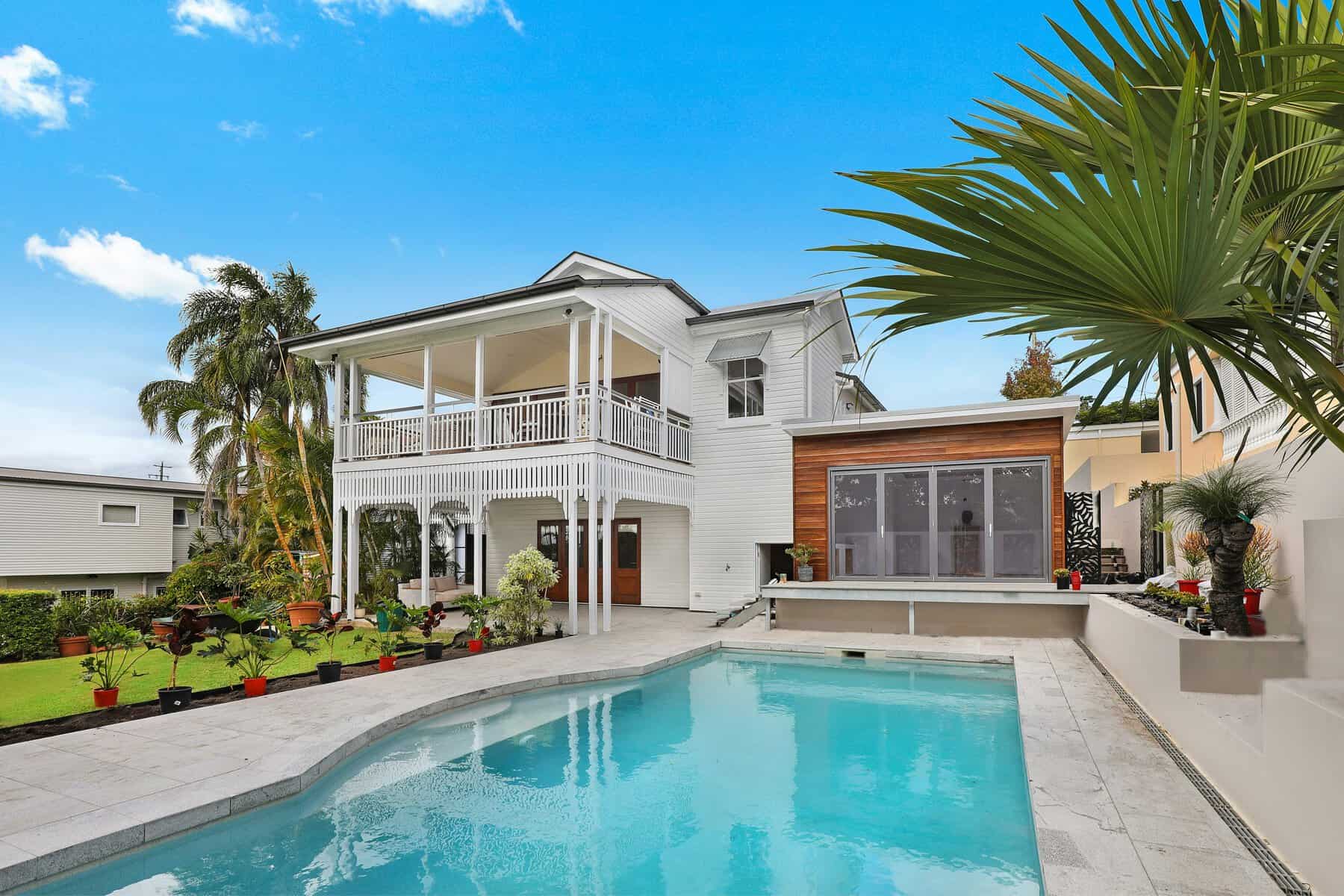
New analysis reveals investors who own houses like this in Batemans Bay are vulnerable to the federal government’s proposed tax changes.
Mr Lardner said the likely result was not a housing crash, but a prolonged period of stagnant prices in exposed markets.
“The base case is therefore a prolonged flatlining of values in investor-reliant pockets, not a clean handover from investor to owner-occupier,” he said.
InvestorKit senior research analyst Junge Ma said the suburbs most exposed to a reduction in investor borrowing power were not necessarily the most investor-heavy markets overall, but rather markets where several risk factors combine at the same time.
“Affordable investment markets with stronger rental yields may prove more resilient because first-home buyers and owner-occupiers can partially replace investor demand if conditions soften,” she said.
“Similarly, many premium house markets remain predominantly owner-occupier driven, reducing their direct exposure to investor lending changes.”
Ms Ma said the greatest risks appeared to be concentrated in high-density apartment markets where leveraged investors formed a key source of demand, while rental yields provided limited cushion and supply dynamics offered weaker long-term value protection.
Waterloo in NSW is most exposed, according to InvestorKit, given its investor-heavy luxury apartment market with high supply concentration.
Zetland and Rhodes in NSW are also named as being vulnerable, followed by Docklands, Southbank, and Melbourne city in Victoria, and Newstead, Fortitude Valley, Teneriffe, and Broadbeach in Queensland.















 English (US) ·