
While many investors may be considering selling their properties before proposed changes to the Capital Gains Tax, Simon Loo and his wife Lin Wu are planning on buying more.
The 41 year-old business owner owns a whopping 88 properties across Australia, having started 17 years ago to escape the 9-5 work cycle.
“When you buy a bargain, whether it’s a house or an iPhone, if it’s low enough you can make a buck on it,” he said.
Married investors Simon Loo and Lin Wu own 88 properties across Australia, and Mr Loo said new capital gains tax changes encouraged them to buy more. Picture: Sam Ruttyn
“The equity I accumulate when ever I buy these houses helps me buy the next one … the rental income I get from these properties not only pays for all this interest, but also gives me an income for me to live off of.”
Mr Loo bought more than a dozen properties in just 7 years by finding cheap suburbs in regions such as Logan and Moreton Bay: buying homes to rent out, then selling some after property prices rose to pay off mortgages on the others.
He used this wealth to help fund his buyers agency House Finder, where he began advising future homeowners on how to buy a house today.
Investors such as Mr Loo bought cash flow neutral homes across regions such as Logan, QLD, where passive income and equity would help pay off his various property loans.
But with upcoming federal budget changes to the CGT, new investors would find it hard to do what Mr Loo and Ms Wu did.
Exclusive PropTrack analysis found suburbs where home prices vastly outpaced inflation would be subject to huge bill hikes under the new CGT system.
Selling a long-held unit in the Logan region, where Mr Loo had bought, would only cost $43,000 more in tax than it would under the old measures.
However, a property held in New Farm for 35 years would result in a tax hike of $644,000, turning $758,000 in tax to a staggering $1.4m.
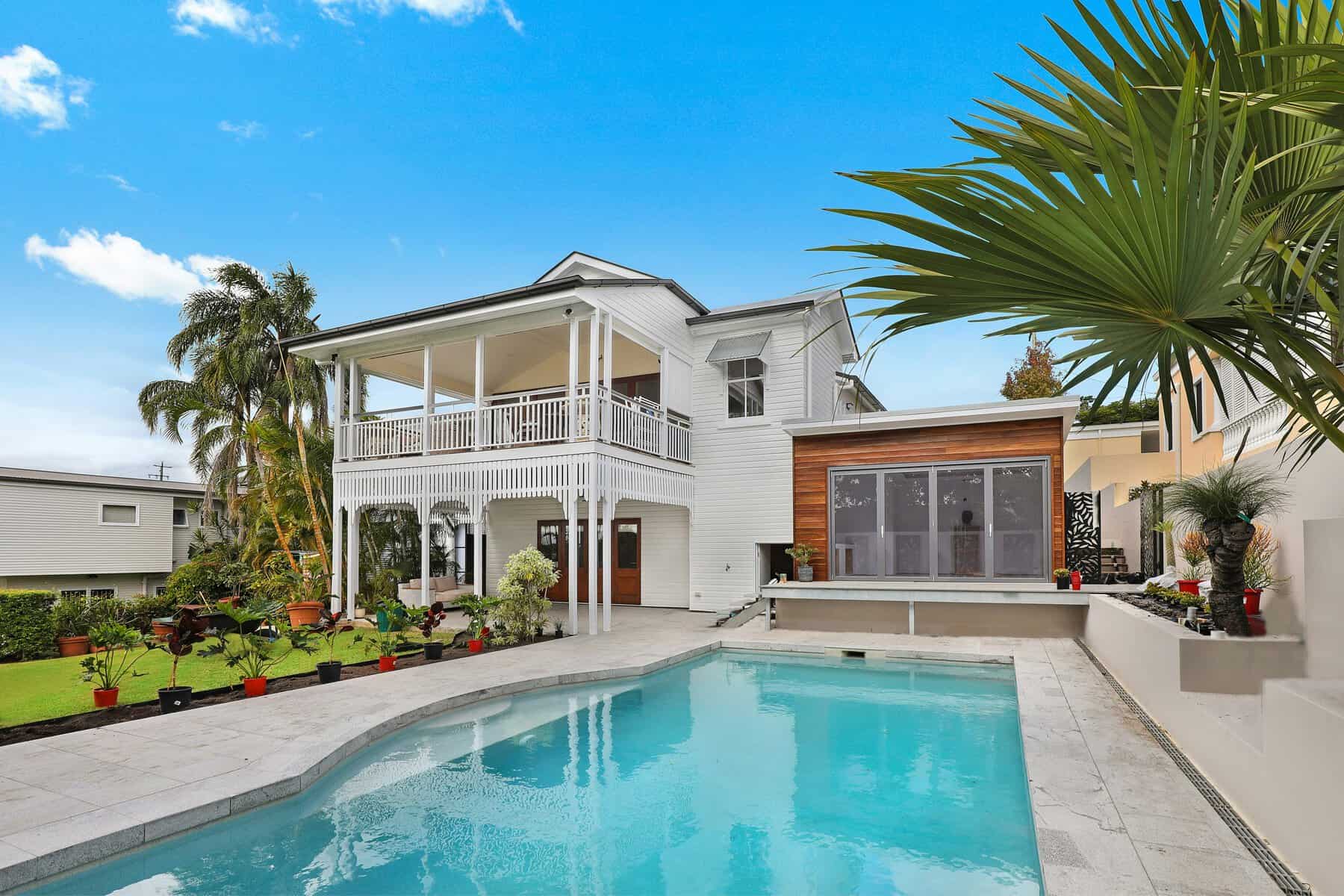
One of Mr Loo’s investment homes in Crestmead. New PropTrack research found new CGT rules would give some investors up to a $640,000 tax hike when selling their property.
Beginning in July 2027, investors will be made to pay a flat 30 per cent minimum on the money they have made on an investment property. These changes will be grandfathered in, meaning the new rate will only apply to gains accrued after they come into place next year.
CGT changes, along with a restriction on negative gearing to currently owned and newly-built homes, are expected to price new investors out of climbing the wealth ladder through flipping property after property.
Mr Loo said investors affected by negative gearing will raise rents in response to the changes, with others such as himself raising theirs to meet the market standard. Picture: Sam Ruttyn
Mr Loo said he avoided negative gearing when he built his wealth by buying cash flow neutral homes, which were much harder to find in 2026.
“Landlords, if you take away the negative gearing benefits, they’re going to jack up the rents,” he said.
“And whenever a property goes up for rent, I just look around for the same [types of] homes and what they’re renting for. If every other home is going for $700 a week, I’ll be charging $700 a week.”
One of Mr Loo’s investment properties in Deagon. Mr Loo said with fewer investors in the market, he felt encouraged to grab more in-demand property to expand his portfolio.
For the investors who have already accrued wealth, Mr Loo said they had no incentive to get rid of their passive income, and every incentive to buy more homes.
“I expect I’ll be adding more over the next 12 months,” he said. “Houses in major capital cities in affordable housing areas will never go out of fashion … that type of property will always have people who need to live in it.
“The price of these properties over time is going to go up. And if rents are going to go up in the short term as well, as an investor, wouldn’t I want to be exposed to that?”
“Houses in major capital cities in affordable housing areas will never go out of fashion.” Picture: Sam Ruttyn
Ray White AKG CEO Avi Khan said rising rents would continue until the underlying problem of low supply was met by the government.
Ray White AKG CEO Avi Khan said attempts to change investor habits would not help ease rents or home prices when the core issue of supply was still unaddressed.
“The uncomfortable reality is that there is no quick fix; Australia has a housing shortage,” he said.
“A question policymakers should always ask is: ‘Will this policy result in more homes being built and available to live in over the next five years?’ If the answer is no, it’s not going to materially improve affordability for renters.”















 English (US) ·