
Kent Lardner says change to Capital Gains Tax concessions would be felt across a greater share of the Hobart housing market than any other city. Picture: Supplied
There will be ‘almost nowhere to hide’ in the Hobart property market if the federal government reduced Capital Gains Tax concessions.
This is the grim message to renters and investors from FoundIt director of research Kent Lardner.
His new property report shows Hobart is the nation’s most CGT-sensitive housing market.
He said it came down to almost nothing costing enough to be safe.
“It is Australia’s smallest capital and its most affordable. But those same qualities make Hobart the city where a change to Capital Gains Tax concessions would be felt across a greater share of the housing market than anywhere else,” he said.
MORE: Heaven sent: This 1880s church could be yours
Despite an unusable kitchen, this home fetched over $500k
Reform proposals being debated ahead of May’s federal budget include slashing the 50 per cent CGT discount, which would eat into the end-profits landlords rely on to offset their ongoing rental losses.
Hobart’s median house price of $722,500. Mr Lardner’s modelling shows investor sensitivity peaks in the $600,000-$800,000 price band.
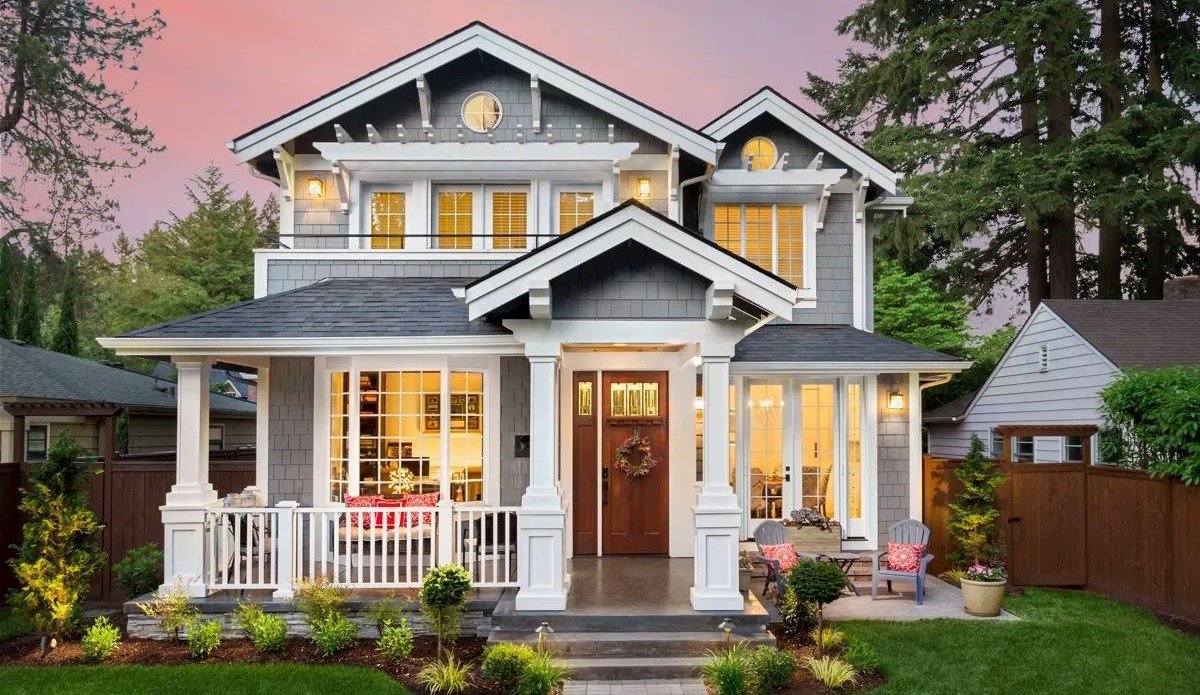
Sweet spot: No.34 St Helens St, Lindisfarne is listed at $760,000-plus with Harcourts Signature. Picture: Supplied
This is the range where deposit requirements are manageable, mortgage servicing is feasible with rental income, and the gap between rent received and mortgage paid is tolerable because the investor expects capital growth and knows the CGT discount will shelter a portion of the gain, Mr Lardner said.
“In Sydney, that price band captures 3 per cent of suburbs. In Hobart, it captures 62 per cent,” he said.
Perth has higher yields and Adelaide more active investors, but neither matches Hobart’s combination of affordability and strong yields.
In Perth, 34 per cent of suburbs exceed $1.2m; in Adelaide, 26 per cent. In Hobart, just 3 per cent.
Mr Lardner said this absent premium buffer explains Hobart’s tax-change exposure.
While other capitals have substantial markets priced beyond leveraged investors where CGT concessions are irrelevant, he said Hobart “essentially has no such zone.”
“The result is a market where CGT sensitivity is not concentrated in a corridor or a price band. It is the default condition,” he said.
MORE: ‘Significant’: Hobart property prices hit new peak
‘Effectively none’: Low-income earners cannot afford rent
PIPA chair Cate Bakos.
The Property Investment Professionals of Australia says investor confidence is already deteriorating amid speculation of reform.
PIPA chair Cate Bakos said investors have carried the weight of Australia’s rental supply for generations, providing more than 90 per cent of rental homes.
“Any policy shift that undermines their confidence risks shrinking the pool of available homes at the very moment renters can least afford,” Ms Bakos said.
MORE: Sandy Bay stunner is on another level
Sold: New local owner for luxe Tassie hotel
David Zerna, director of Hobart’s Timar Buyer’s Agency, said investors enter the market with a return target in mind, but if CGT is reduced they would need to hold onto properties longer to achieve the same result.
“That has a direct supply implication,” he said.
“If investors extend their hold period by an additional three to five years beyond current norms, fewer properties will come back to market each year. In my view, that will tighten supply rather than release it.”
Director of Hobart’s Timar Buyers Agency, David Zerna.
Mr Zerna said investor-held stock is not evenly spread throughout the state.
“A significant portion of it is concentrated in the Glenorchy, Clarence and Launceston LGAs, which is where I would expect the effects of GCT change to be most visible,” he said.
Last year, Hobart rents increased by $30 per week, Real Estate Institute of Tasmania figures show, with a typical three-bedroom house costing $580 per week.
Mr Lardner said implementing tax changes in the current climate could be a win for higher-income first-home buyers, but the benefit would come at the expense of lower-income renters.
“It will be a nightmare for tenants,” he said.
“As the tenant pool grows and the supply of rentals stalls, competition will rise. Rents could rise.
“It may well become easier for some renters to become first-home buyers because of less investor competition, but not every renter has the means to buy.”
Mr Lardner added that removing the discount on capital gains tax charges is unlikely to push down home prices across the market as a whole.
He said a more likely outcome would be a flattening in home value growth over the longer-term, especially in markets where prices have been growing rapidly due to strong investor demand.









 English (US) ·