
“I’m not saying that owning a house makes life into some kind of blissful paradise; simply that it makes the difference between freedom and enslavement.”
— Irish-American author Tana French
Many renters today feel trapped, bound by a seemingly unattainable number when considering the question: How much money do I need to buy a house?
“One of the biggest misconceptions people have today is that they simply cannot afford to buy a house,” says Ashlee Sheppard, a leading home loan specialist in Georgia. “So many people assume homeownership is out of reach before they ever have a real conversation about their numbers.”
In this guide, we’ll break down the typical costs you can expect, provide expert tips, and give you an easy way to estimate your own budget.
A Top Agent Can Help You Find A House You Can Afford
We analyze millions of home sales to find buyer’s agents who will show you the right home at the right price. Our service is 100% free, with no catch. Agents don’t pay us to be listed, so you get the best match.
How much money do you need to buy a house?
The quick answer: To buy a house, you typically need to save between 3% and 20% of the home price for a down payment, plus an additional 2% to 5% of the purchase price for closing costs. For a median-priced $430,000 home, this generally means needing roughly $21,500 to $107,500 in cash up front. Here’s a look at this range split into three levels:
| Low-end estimate: $21,500 | $12,900 (3%) | $8,600 (2%) |
| Middle point estimate: $58,050 | $43,000 (10%) | $15,050 (3.5%) |
| High-end estimate: $107,500 | $86,000 (20%) | $21,500 (5%) |
Try this simple home affordability calculator
Use our Home Affordability Calculator below to get a clearer picture of what you might be able to afford based on your situation.
Use the toggle at the top to calculate by income or monthly payment. Click the “Advanced Options” link to fine-tune details such as property taxes, PMI, and insurance costs. The calculator will automatically include some typical expenses to help you see how much money you need to buy a house.
Pam Charron is a top-rated Florida real estate agent who works with over 84% more single-family homes than average agents in her Sarasota market. She says affordability calculators are helpful, but cautions that no two people have the exact same finances, and owning a home looks different for every buyer.
“The key is that there always has to be a little on reserve — don’t overextend yourself,” she explains. “I’m seeing first-time homebuyers being much more conservative today, and I am very thrilled with that.”
A closer look at the 3 upfront costs you need to buy a home
When you’re calculating how much money you need to buy a house, these are the three costs to focus on first:
Down payment
The down payment is the portion of the home price you need to pay up front. While 20% is often cited as the standard, many buyers qualify for much lower options. Sheppard says the perceived 20% down payment requirement is one of many homebuying myths.
- Conventional loans may allow as little as 3% down
- FHA loans typically require 3.5%
- VA, USDA, and other programs may offer zero-down options for eligible buyers
According to data from the National Association of Realtors (NAR), a typical down payment for first-time buyers in the U.S. today is 10%.
A larger down payment can lower your monthly payment and help you avoid private mortgage insurance (PMI), but it’s not a requirement for buying a home.
Try our Down Payment and PMI calculators
Closing costs
Closing costs are fees tied to finalizing your home purchase. These typically range from about 2% to 5% of the home’s price.
They may include:
- Lender fees
- Title and escrow charges
- Appraisal and inspection costs
- Prepaid items like property taxes and homeowners insurance
In some cases, you may be able to negotiate for the seller to cover part of these costs, which can reduce how much cash you need at closing.
Try our Closing Cost Calculator
Earnest money deposit
An earnest money deposit is a good-faith payment you make after your offer is accepted. It shows the seller you’re serious about buying the home.
This deposit is often around 1% to 3% of the purchase price and is typically applied toward your down payment or closing costs at closing.
If the deal goes through, you don’t lose this money; it simply becomes part of the total amount you’re already planning to pay.
Try our Earnest Money Calculator
If you’ve been saving up for a down payment, closing costs, and earnest money, Charron says there’s an important next step: “Before you get carried away with open houses and online listings, talk to a lender to get pre-approved for a mortgage.”
She explains that there’s a difference between mortgage prequalification and true preapproval.
Prequalification is a quick, initial estimate of your borrowing power based on unverified, self-reported financial information, usually with no credit check.
Preapproval is a deeper, verified review of your credit, income, and assets, resulting in a conditional loan commitment and a stronger offer for sellers.
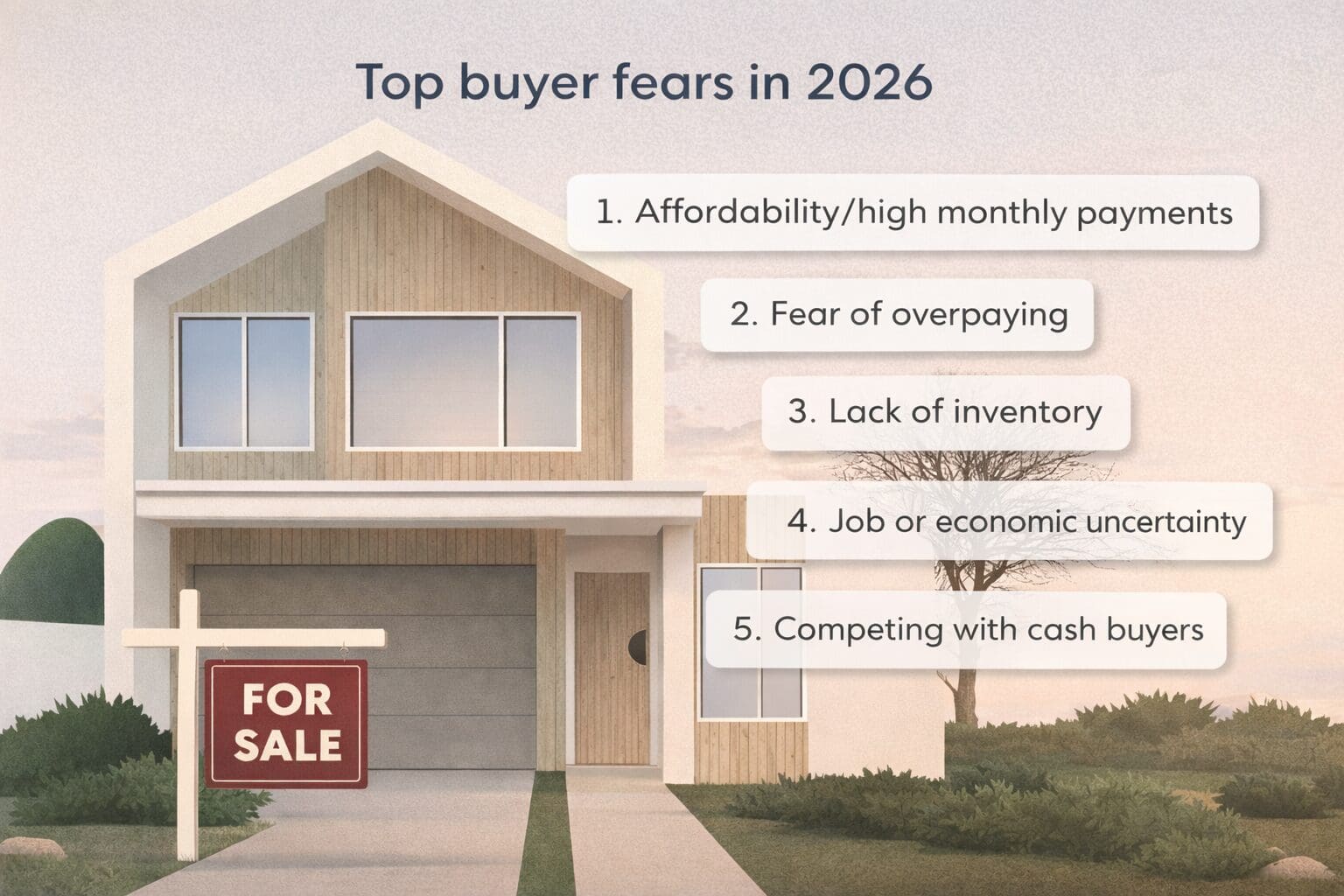 Based on a HomeLight survey of more than 850 top real estate agents nationwide.
Budgeting for ongoing homeownership costs
Once you’ve covered the big three upfront expenses, Charron reminds her buyer clients to carefully plan for the costs of owning and maintaining their new home over time. Here are the main expenses to keep in mind:
- Mortgage payments: Your monthly payment will include principal and interest costs, and may also include taxes and insurance if escrowed.
- Property taxes: These vary by location and your home’s value, but they’re an ongoing annual expense (often paid monthly with your mortgage payment).
- Homeowners insurance: This protects your home and belongings and is required by lenders (may be paid annually, quarterly, or monthly).
- Mortgage insurance (PMI or MIP): This cost applies if your down payment is below your lender’s required threshold, which will increase your monthly cost.
- Utilities: You’ll need to budget for electricity, water, gas, trash, and internet.
- Maintenance and repairs: Many homeowners budget about 1% of the home’s value per year to cover upkeep, such as landscaping, system maintenance, and repairs.
- Homeowners association (HOA) fees: Common in condos and some neighborhoods, they cover shared amenities and services, such as maintaining a clubhouse, pool, or community parks.
“If you’re buying into a condominium or a single-family home that has a homeowner association, be sure to ask about the fees, and whether they are expected to go up,” Charron says.
Should I wait for interest rates to drop before buying?
Many first-time buyers feel like the smart move is to wait for lower rates. But that strategy can come with tradeoffs.
“If rates decline, demand will surge. Inventory is already tight, and lower rates will likely create even more competition,” says Sheppard. “That pushes prices up and makes it harder for buyers to negotiate.”
In other words, while a lower rate might improve affordability on paper, it could also mean facing more bidding wars and higher home prices. For many buyers, it’s less about timing the market perfectly and more about finding a purchase that fits their budget today. Homes can be refinanced later if rates go down.
Are today’s mortgage rates considered high?
It’s easy to compare today’s rates to the unusually low levels seen during the pandemic. But those rates were the exception, not the norm.
“Many people still believe that interest rates of 3% to 5% are the standard, but historically, 6% to 7% is normal,” Sheppard says.
Data from Freddie Mac shows that the average 30-year fixed mortgage rate over the past 50+ years is about 7.7%.
“The challenge is helping people understand that the rate itself is not the real issue,” Sheppard says.
Is renting really cheaper than buying right now?
For many buyers, renting feels like the safer or more affordable option. But the numbers don’t always support that assumption.
“When we actually break it down and compare their current rent to what a mortgage payment could look like, the gap is often not what they expected,” Sheppard says. “What is hard for me to see is people continuing to rent, sometimes paying just as much or more than a mortgage would cost, without building any equity or long-term stability.”
How do I know if I can actually afford to buy a home?
“Homeownership is not always about finding the perfect rate or perfect timing,” Sheppard says. “It is about understanding the full picture. When buyers take the time to look at the numbers clearly, many realize it is more possible than they thought.”
Sheppard says you need to step back and look at your income, savings, debt, and loan options together — and not on your own. An experienced loan specialist can help you see what’s truly within reach.
“Affordability is about strategy, preparation, and long-term planning, not just chasing the lowest rate,” Sheppard explains. “What is frustrating is that the fear of the rate is keeping people from building equity and stepping into opportunities that are still very real today.”
Sheppard offers this closing thought: “My advice is simple. Have the conversation. Ask questions. Explore every option. There is often a path forward, but you need someone to sit down with you and assess the full picture. The right guidance can completely change your outcome.”
When you’re ready to buy, HomeLight’s free Agent Match platform can connect you to a top-rated real estate agent who specializes in helping first-time buyers become homeowners. We analyze over 27 million transactions and thousands of reviews to determine which agent is best for you based on your needs.
Header Image Source: (Roger Starnes Sr/ Unsplash)





 English (US) ·