


An average Brisbane home would be worth less than $250,000 today if property prices had simply kept pace with inflation — but instead it has soared past the $1 million mark, creating one of the nation’s biggest property wealth booms.
Exclusive new PropTrack analysis reveals a house bought for $95,000 in 1990 would be worth just $248,000 today if it had risen in line with the cost of living. Instead, Brisbane’s median home value has surged to $1.06 million.
RELATED: 30 Aus property markets at risk of flatlining after budget tax hit
| BIGGEST GAINS IN HOME PRICES BEYOND INFLATION | |||
| Suburb | Median price | If prices had | Median price |
| in 1990 | followed inflation | today | |
| Kensington Grove | $27,500 | $71,800 | $1,065,000 |
| Kooralbyn | $25,500 | $66,600 | $818,750 |
| Cedar Grove | $36,000 | $94,000 | $1,100,000 |
| Regency Downs | $29,475 | $76,900 | $870,000 |
| Walloon | $29,250 | $76,400 | $841,500 |
| Mount Cotton | $42,000 | $109,600 | $1,200,000 |
| Karalee | $45,000 | $117,500 | $1,227,500 |
| Russell Island | $18,500 | $48,300 | $490,000 |
| Yamanto | $33,500 | $87,500 | $875,000 |
| Fernvale | $31,995 | $83,500 | $830,000 |
| Source: PropTrack. | |||
The extraordinary gap highlights just how much wealth Queensland property owners have accumulated beyond inflation over the past three decades — gains that are now under fresh scrutiny following proposed federal changes to capital gains tax.
The research found Brisbane recorded the strongest long-term house price growth of any capital city over the past 36 years, overtaking Sydney and Melbourne despite starting from a much lower base.
By stripping out the changing value of money, the analysis reveals how much genuine wealth housing has created — and the results are staggering.
In Kensington Grove in the Lockyer Valley, a house would be worth just $71,800 today if prices had tracked inflation since 1990. Instead, the median house price sits at $1.06 million — more than 3000 per cent above inflation.
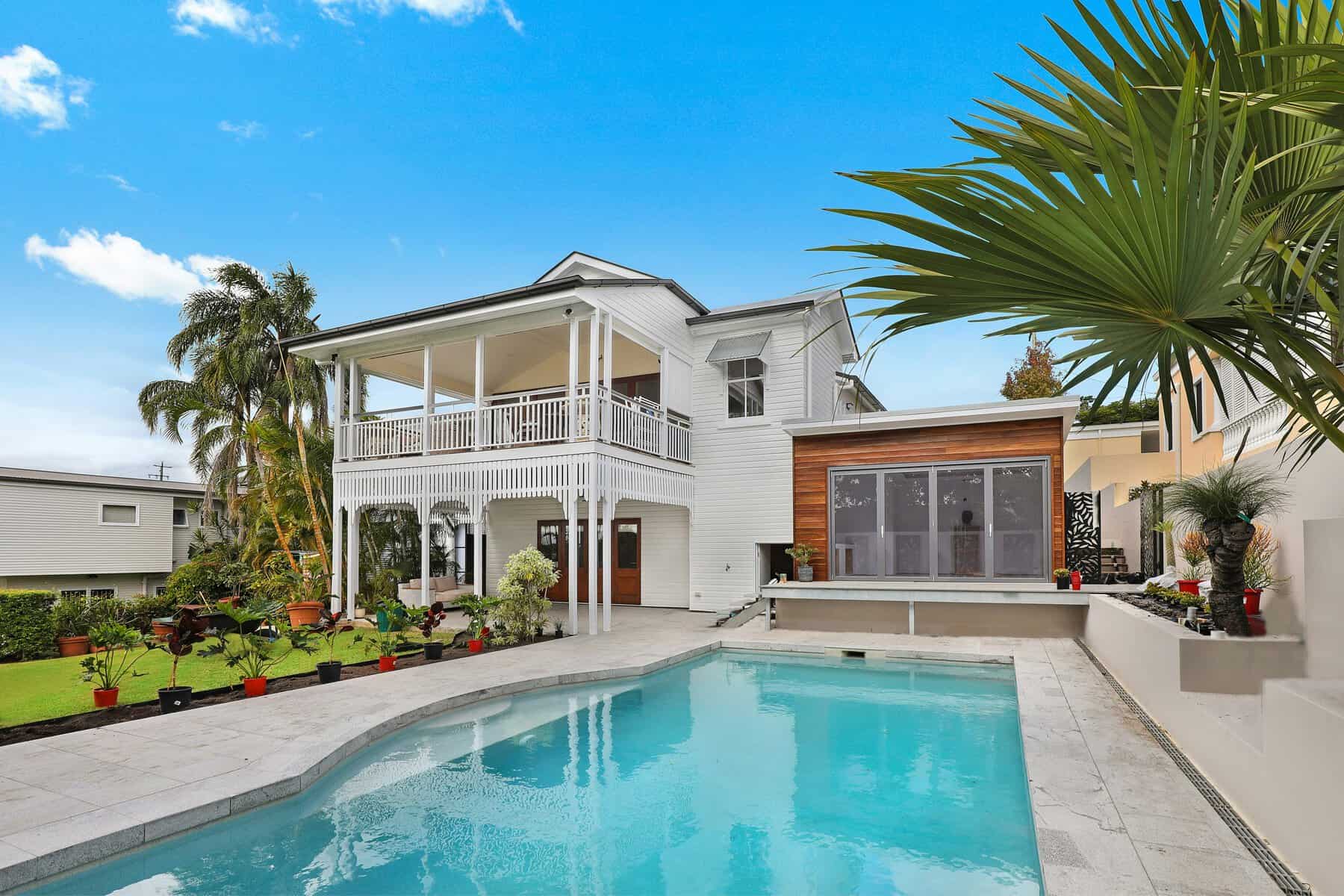
This property at 133 Fairway Dr, Kensington Grove, is on the market for $1.5m to $1.65m. It sold for $150,000 in 2015.
Kooralbyn and Cedar Grove recorded similarly explosive growth, with median house prices increasing by around 30 times the rate of inflation.
In Mount Cotton, a house that would be worth just $109,600 today if prices had risen in line with inflation now commands a median value of $1.2 million.
Even Brisbane’s blue-chip suburbs delivered eye-watering gains. In New Farm, median house prices have risen more than 2000 per cent over the past 35 years to $3.37 million.
REA Group economist Angus Moore said adjusting for inflation revealed just how big of a wealth creator property had become.
“For many households, real estate is an enormous source of wealth,” Mr Moore said.
“The amount of wealth tied up in residential property is enormous. That is a feature of Australian households. And it means for many people, a significant share of their wealth is in housing.”
REA Group senior economist Angus Moore,
Mr Moore explained that inflation over recent decades was substantial, but home price rises were even higher.
“When you look over such long periods, when you look over three and four decades, the increases are remarkable, even when accounting for inflation,” he said.
“You have to step back to see just how much things have changed, and it’s considerable. It is interesting to see how much inflation has jumped, and the fact that home price rises are up so much more than inflation is quite incredible.”
Halo Advisory director Greg Bartels said the data highlighted that while inflation accounted for a steady foundational rise in property values, the true driver of wealth in Queensland had been “genuine, structural capital growth” driven by interstate migration and infrastructure booms.
This property at 9 Llewellyn St, New Farm, is on the market for offers over $4.2m. It sold for $105,000 in 1988.
“Stripping out inflation exposes just how much paper wealth is actually high yielding, real economic profit,” Mr Bartels said.
“However, by exposing these substantial above inflation gains to higher taxation, the era of risk-free, highly subsidised wealth creation through Queensland property is tightening, shifting focus toward assets that rely heavily on physical yield rather than purely speculative capital gains.”
MORE: Gen Z buyers fuel ‘overheated’ Brisbane property market in race for starter homes
Brisbane’s ‘super-rich’ property market explodes with surge in $5m-plus homes
Mr Bartels said Brisbane was uniquely exposed to the proposed federal government CGT reforms due to its “extraordinary, nation-leading capital growth” over recent years, which had wildly outperformed historic inflation averages.
“Because local property values have surged dramatically, Brisbane real estate represents the exact type of high outperformance asset that the new indexation model will target in future,” he said.
A typical house in Brisbane is now worth more than $1m, but would only be $250,000 if price growth had tracked inflation.
“Since the indexation method only shields the inflation-matched portion of a gain, Brisbane investors will see very little of their recent upswing protected, leaving a far higher percentage of their windfall exposed to the new 30 per cent minimum tax rate upon sale than investors in slower-moving interstate markets.”
Mr Moore said a combination of structurally declining interest rates, the rise of double-income households with higher borrowing capacity, and a systemic failure to build enough new homes, had created the perfect storm for prices to skyrocket.
“There were lots of factors that drove these incredible price rises over recent decades,” Mr Moore said.
“The main change is that interest rates and inflation used to structurally higher than today. Mortgage rates today are lower and people can borrow more.”
It was unlikely some of these trends would ever be repeated and coming generations of home buyers and investors had little chance of replicating the kind of gains Baby Boomers received, he said.
“It is unlikely we would see gains of the last 30 years repeated,” Mr Moore said.
“Baby boomers are lucky. It was an unusual period. A series of structural changes to our economy pushed up prices and drove strong growth… that’s probably not going to happen again.”
Help us improve your reading experience
Got a minute? Your feedback will help us build a better experience for you.
Help us improve this page















 English (US) ·