
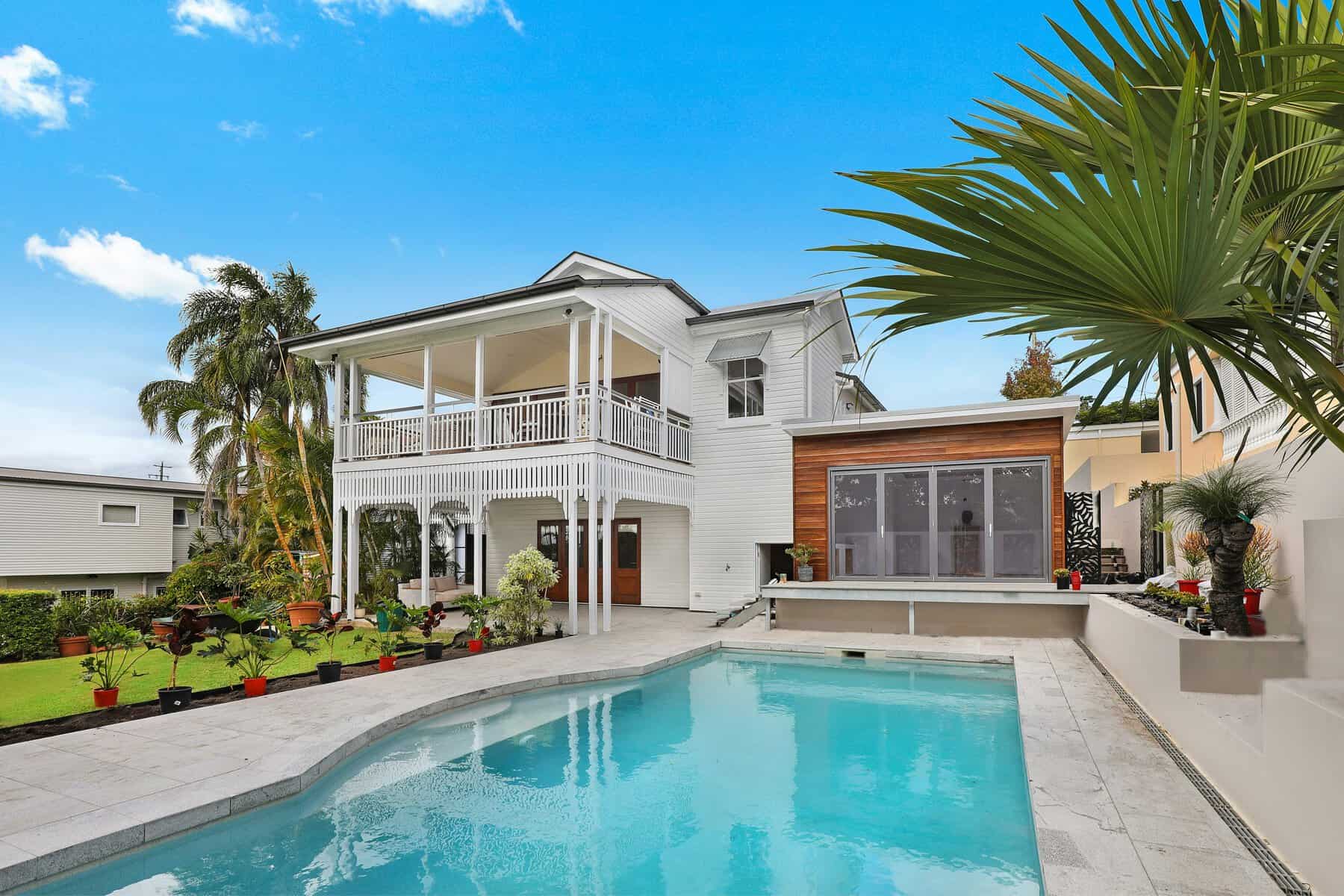
Brisbane hit a fresh all-time high of $1.08m for all dwellings. Picture Lachie Millard
Brisbane home prices have hit a new record – with houses surging by a shocking $173,500 in just one year, now an insane $241,000 more expensive than Melbourne as four other capitals fall.
This as the latest PropTrack Home Price Index for May – out Monday – found half of Australia’s state capital cities more than doubled in value since the start of 2020 – seeing Brisbane hit a fresh all-time high of $1.08m for all dwellings.
RELATED: Up $145k: Gold Coast to overtake Sydney within a year
PropTrack senior economist Angus Moore.
Brisbane’s median house is now $1.236m after a 15pc annual rise – seeing a shocking $173,500 added in 12 months, double what the average Queenslander takes home in pay.
PropTrack senior economist Angus Moore said Brisbane had seen “such an enormous run-up in prices that very few homes are truly affordable” now.
Brisbane units hit $865,000 – up a staggering 20.5 per cent annually, adding $148,900 in a year. It now sits within $19,000 of Melbourne’s entire all-dwellings median of $846,000 – a figure that includes houses in the Victorian capital.
The Queensland dominance extended down the coast too – with Gold Coast houses at $1.45m now $214,000 more expensive than Brisbane houses, and closing in on Sydney at such a rate that PropTrack data suggests it could overtake the NSW capital within a year. Brisbane units at $865k are actually the affordability play compared to the Gold Coast, where units are approaching $987k.
PropTrack monthly data flagged a clear slowdown underway though – the first sign that three consecutive rate hikes were beginning to bite.
“While prices were up modestly in Brisbane, it was the slowest month of growth since late 2022 to early 2023,” Mr Moore said.
“The full effect of those three rate hikes probably hasn’t flowed through yet – and we’re expecting to see at least one more this year,” he said, referring to RBA hikes.
There is a noticeable slowdown happening across the property market as rate hikes and new tax measures filter through.
Don’t expect a price crash though, with market forces working against that, he said.
“Price declines are unlikely to be large as the labour market remains resilient, households have strong equity buffers – limiting forced sales – and high construction costs and supply constraints are limiting the volume of new homes.”
The figures showed buyers moving further out to significantly cheaper areas within hours of the Queensland capital – and being rewarded with strong growth, outperforming the broader Brisbane market.
“Those outer-lying suburbs that are a bit more affordable have, not universally but on average, performed a little bit better over recent years, in part because of their relative affordability,” Mr Moore said.
Ipswich and Logan-Beaudesert – both within 40km of Brisbane, outperformed the capital at 20.2 per cent and 19.2 per cent annual growth respectively. Toowoomba – 130km west and an hour and a half’s drive – is up 18.7 per cent to $816,000.
The state’s strongest performer was Darling Downs-Maranoa – up 21 per cent in one year, with a median of just $562,000. Parts of this vast region sit 290km from Brisbane – about 3.5 hours by road – while the Maranoa end stretches to 525km and six hours.
Ipswich outperformed Brisbane, rising 20.2 per cent in the past year. Picture: Nigel Hallett
Queensland’s property run is not confined to the south-east: Townsville is up 16.94 per cent annually – adding $89,000 to the median in a year – and grew 0.6 per cent in May despite three consecutive rate hikes. Cairns is up 16.32 per cent annually, adding $96,000, and gained a huge 1 per cent in May alone.
“The fact that it’s still up 0.6 per cent in May, despite three consecutive rate hikes, suggests there’s still plenty of demand supporting prices there,” Mr Moore said.
“People are looking for those more affordable areas and that’s holding prices up there. That’s not just true in capital cities versus regional areas – it’s true even within cities.”
PropTrack expects Brisbane to continue softening through the rest of 2026 under the weight of further rate hikes and some pullback in investor demand post-Budget, but tight supply, strong population growth and a resilient jobs market mean the Queensland capital was unlikely to see a sharp correction.













 English (US) ·